
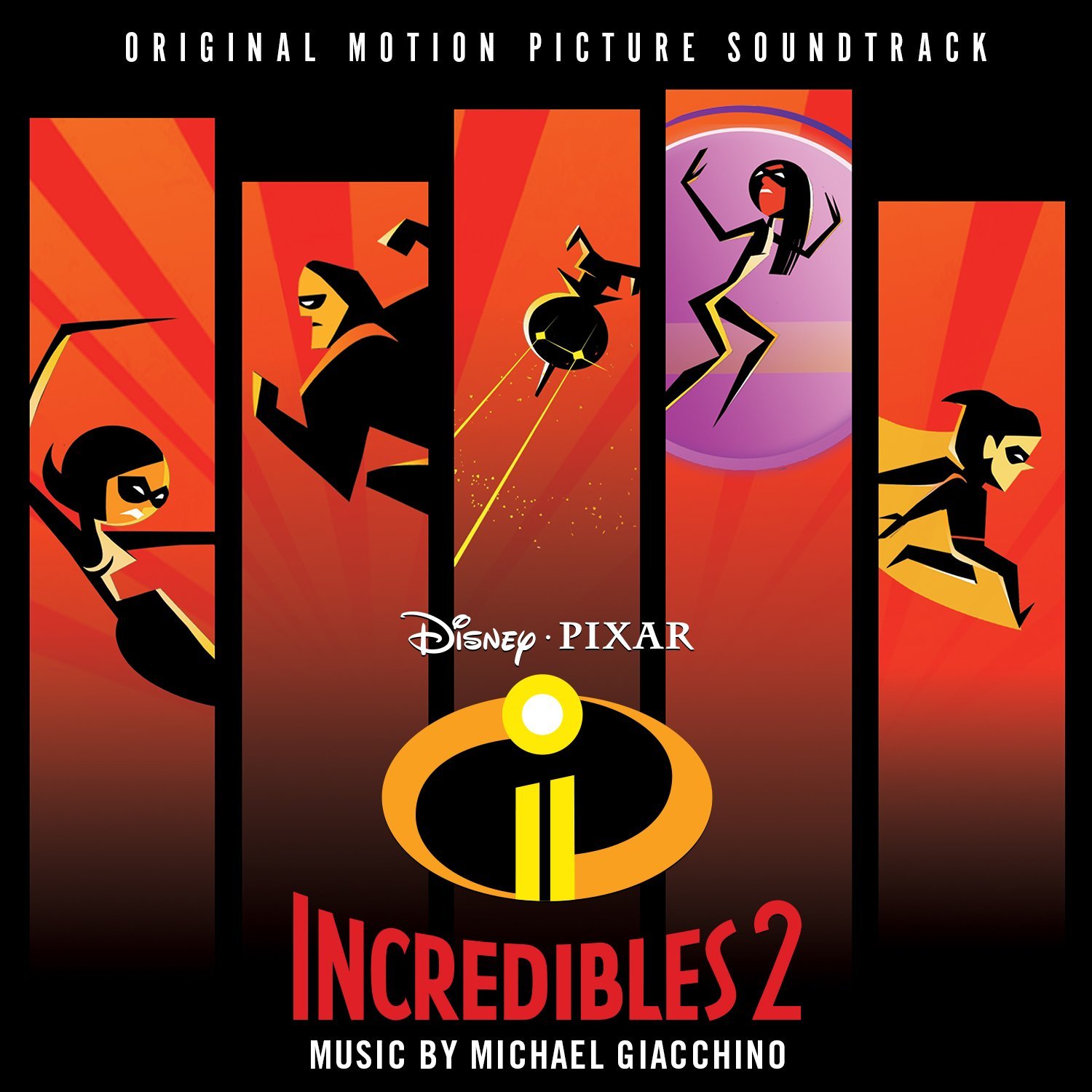
Sequels are hard. Especially after thirteen years. This one captures some of the magic of the first and then some.
Pixar has a sequel problem right now (Also worth noting it has an even worse management problem it’s trying to get a handle on, which turned out the likes of my favorite Pixar film The Good Dinosaur, which I learned from this article originally had John Lithgow and Neil Patrick Harris on board?). Six of the last ten films have been sequels, though it appears that we are moving into a phase where 2 of every 3 out of Pixar will be original concepts yet again like the Golden Years of my youth. That being said, Incredibles was a prescient film that anticipated the zeitgeist of superhero films, so it has a little bit of capital to speak out as a kid-friendly Watchmen, harbinger of pop culture to come. Judging whether I2 is sponging off of the ghost of its former success or moving the ball down the field in terms of furthering the genre, I’d say its a bit of both. Would it have been better if it had never been made (Mother!, The Good Dinosaur?), maybe, but it had things to say and I’m listening.
Below, I think we’re going to tease apart some spoiler-y elements of the plot, so maybe save this for after you’ve found a theater that will seat you and your partner in the same row in a month and then come back.
Bao, the much-anticipated short film coming out of Frozen’s 30-minute experiment testing the patience of every grandparent who took their grandchildren to Coco but weren’t quite sure what Coco was about, was the story of my life, sans my mom’s ability to make dumplings. Maybe if it had been mahimahi? Or spam musubis? It was so crazy dark as a concept at times. I love that the dumpling and the mother are able to be equally savage to one another and that it’s not just a Giving Tree scenario.
Cast. Was nice to hear a familiar voice in Catherine Keener’s Evelyn Deavor. I know her as the protagonist from Gimlet’s serial radioplay Homecoming, alongside Oscar Isaac, David Schwimmer, and Amy Sedaris. I was maybe too young to know this when I saw Incredibles for the first time and appreciate what it meant, but Sarah Vowell does an amazing job as Violet.
Hypnosis in Movies. The trailer alludes to this a little bit, but let’s get more in depth about the villain of this film, Screenslaver. I feel strongly about this in literature, cartoons, television, and movies alike, that hypnosis as a plot device makes for bad storytelling (Tvtropes has exhaustive research on this topic and Feminist Frequency’s Anita Sarkeesian has long fought the good fight against this sloppy form of apologetics for weak female characters in video games). I’m not just talking about Edgar Wright’s lovely adaptation, Scott Pilgrim vs The World (2010), when Ramona Flowers loses her agency to free herself from the emotionally abusive relationship she has with her on-again off-again ex. This stuff goes as far back as ancient Greece: Sophocles’s Ajax is a play about a dude who kills himself because of the shame he feels when he kills a bunch of barn animals in a fit of madness instead of the Greek generals he feels are mistreating him. Hercules Furens is a Roman play by Seneca where the hero deep sixes his family while apparently touched by the malevolent goddess Juno. The thing is, these plots are crazy difficult to unpack because as observers and critics of the story, we lose some pretty basic tools of the trade when we can’t rely on our protagonist’s rational judgement.
When I cannot point to an action or a word that a character says and connect it to an understandable phenomena like reason or self-interest or a moral code, when the answer is “she did it because someone was controlling him” (I see you, Jessica Jones) or “he did it because no one was in control,” (Incredible Hulk, maybe? fugue states, definitely) there’s very little I can do to bring that back to the real world. I can’t make hypnosis or mind control into a metaphor that has a referent in human experience. Agency is an important marker that we as readers and audiences have to judge character. We judge whether characters are doing good or bad based on the decisions they make and the things they say at any given time in the plot. When they do good things, they’re being good, when they do bad things, they’re being bad, and consequences flow from those decisions with Aristotelian certainty. If bad things happen to people who do good, the genre is tragedy and when good things happen to bad people, the genre is horror. Usually, when a character chooses not to recognize his or her culpability, their agency in wrongdoing, we recognize this lack of accountability as a character flaw, but in the case of mind control and hypnosis, by definition, the victims of this violation have no complicity in the act. They explicitly don’t want to do the thing they’ve been hypnotized to do, otherwise there would have been no necessity in the plot to introduce hypnosis in the first place.
It all feels a little victim-blaming whenever you hear hypnosis victims in pop culture talk about their lingering guilt over the actions, which is maybe partially the point, but it seems like such a weird pantomime of emotion to go through. We as an audience get to feel the PTSD of the protagonist and we have a vague sense of the existential dread and shame associated with being violated, but we don’t have any reason to believe that the victim had any say in the matter. Hypnosis in comic books doesn’t allow for complicity of the hijacked. No one goes around wanting to be Imperius’d. So, it’s instantly forgiven by the audience, and yet it becomes a motivating force for the protagonist in a way that really seems misdirected. On the flip side, it’s equally unbelievable how often the victims of a hypnotized protagonist immediately forgive and forget what hurtful or unforgivable thing has been done or said while that person was under. We as the audience with omnipotence of action have no doubt, but other characters don’t really have a great way of knowing if what’s being said is true. One of the cinematic and literary downsides of hypnosis is that there aren’t really any external indications that someone is under, so it’s unverifiable and open to a lot of doubt and exploitation.
At worst, I think hypnosis and mind control are pretty boring, anti-feminist means of storytelling. They strip our ability as an critics to explain the logical progression of plot and internal motivation of characters, because writers can’t be bothered to come up with plausible events that require characters to make more terrible decisions that flow naturally from necessities of plot. They make it hard to see character arcs and talk about ethics and morality, and what we’re left with is before and after, basically. There’s one or two ways that I think it can be done well.
The first way I think you can hypnotize well is when the victim just straight up doesn’t come back from it. In that sense, hypnosis isn’t really that different from any other form of torture. China Miéville’s Arthur C Clark Award-winning, Hugo-nominated Perdido Street Station (2000) takes this pulpy, tragic mind-suck approach in his novel. The second way is to do what the Incredibles 2 does which is make the mind control action really secondary to the plot. Nothing essential is done or undone under hypnosis. It’s mostly a means of hiding identity. It’s also somewhat tangentially used to work as a visual metaphor for what Screenslaver sees as the d/numbing effects of television and mass media on the public. By removing hypnosis as essential to the action, it frees the story from the regular constraints of that trope.
The Evil Monologue. Screenslaver’s monologue is just about the most spot-in critique of American pop culture we’ve got. We’re talking Death-Queen levels of rationality from Thor Ragnaraok. The notion that the need for super hero (stories) comes from need to feel like you’re doing something (supporting justice) when you’re not (consuming mass media). The substitution of action with action films. Instead of talking you watch talk shows. Instead of games you watch game shows. Screenslaver resentment of artificiality and especially of the emptiness of the super hero story in lieu of real justice seems like such a cutting critique of the current state of social justice and its representations in film.
Friend’s 3 insights were:
- The villain is telegraphed very early on. (Disagree.)
- Dash isn’t given very much to do. He might even have been slowed down from the first film. (That’s right on the nose, and I think there are probably good reasons for it. The focus on Violet and Helen in the sequel seem to read the room pretty well in terms of the moment the film finds itself in. Dash’s discovery of his speed was integral to his identity, as he puts it, and now we’re seeing the way in which Violet’s social emotional development manifests itself in the use of her powers: invisibly eating ice cream and invisibly sneaking around the boat in search of her parents.)
- The ending isn’t very dramatic (yeah, it’s actually the second time that they’ve narrowly stopped a vehicle from causing mass damage on a city–maybe the issue here is the climax is actually when the children are able to escape the house and save their parents? Brooke Gladstone talks about this in her coverage of the Parkland student protests that there’s this pervasive myth in politics that the time when the youths will inherit the kingdom is Not Now But Later and that the adults have got everything under Control in the meantime, and the problem with this thinking is that adults really have messed things up and that children and youth activists are really the only means to enacting real social change that we have. In that respect, Violet and Dash and Baby Parr’s transformation into fully aware supers is the moment freighted with the greatest tension and risk.)
Some favorite scenes. Bob’s frustration with his wife’s success is such a much more realistic and interesting way for the film to turn than if he were the perfect anachronistic husband. The tension in their relationship in the previous film was their anxiety about keeping their pasts past and secret from one another, whereas the present tension, which still crackles on screen, is how to go about teaching their children about navigating in an unforgiving world while still being proud of their abilities and the moral compass the leads them to do what they do.
The fight with the raccoon is probably my favorite scene of the movie. Not just because it happens but because the raccoon is so down for it and he gives as well as he gets. Even the way the confrontation is set up with the homage to classic crime noir cinema is brilliant. I love whenever movies represent movies or television and the two instances of this in the Parr home are really playful.
The business of how slapstick Voyd’s powers are in the battle sequences especially at the end with the plane was so unexpectedly funny. She seems so goofy when we meet her the first two times and then there’s this moment where it seems like we’re echoing the creation of Syndrome from the original movie. She’s so formidable in her fight against Sarah Vowell and then the final use of her powers is really divergent from our expectations.
The film handles a pretty difficult trope, hypnotism, fairly well while also doing cool things in terms of storytelling for the female characters of the Parr family (and Edna!). The villain has a compelling motivation and the central tension between our protagonists is compelling and fresh. Worthwhile sequel even if sequels in general are beginning to grate on us all.


8 Comments