
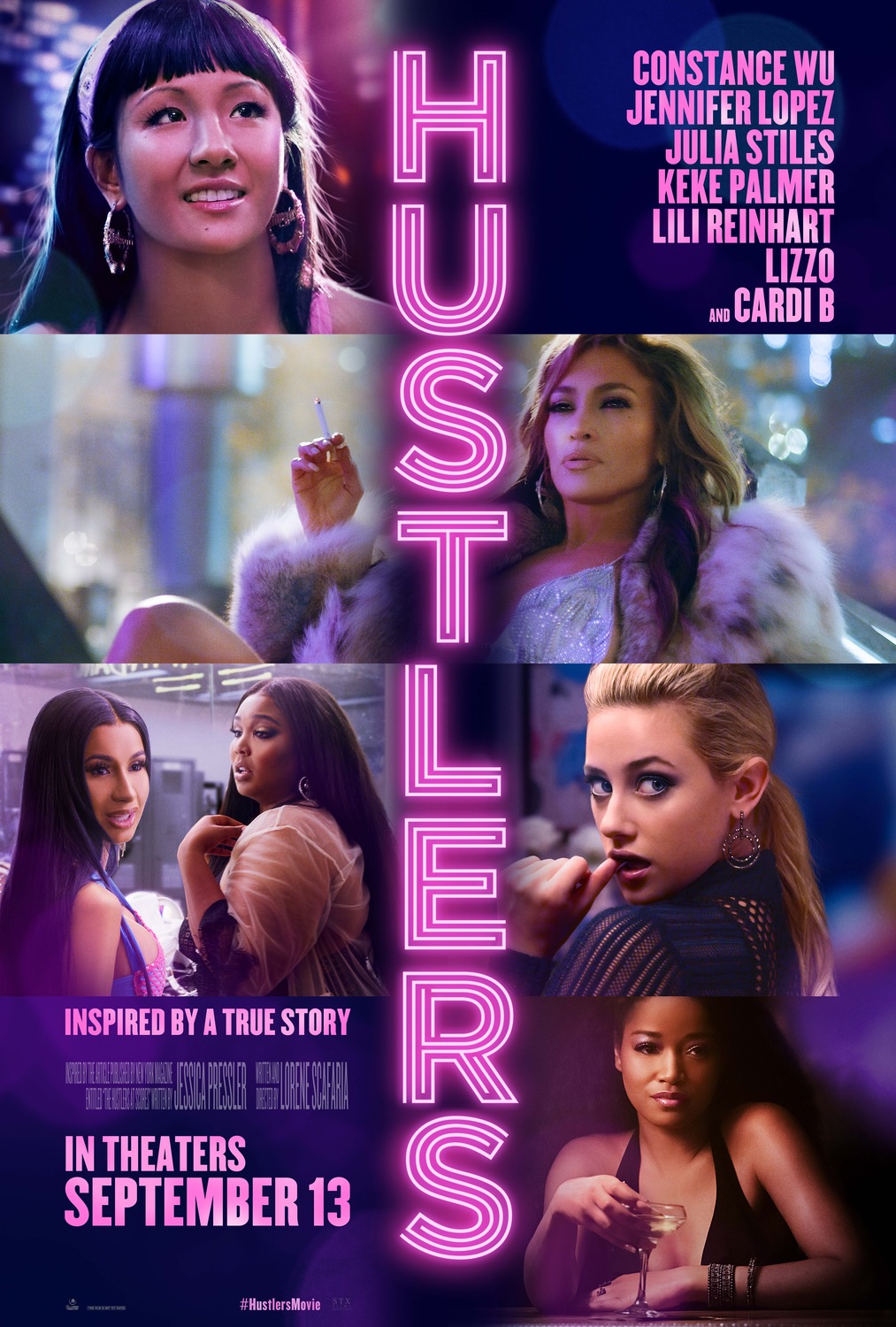
Hustlers has been out for months now (we’re halfway through November without my review being logged) and it rode on the success of its binary identity as both a guilty pleasure and a serious film about female friendships and growing apart. The canniness of the film, its ability to give its audience fan service while also undermining the male gaze is central to Wife and my shared enjoyment of the film. Lili Reinhart, whose appearance in the trailer is the sole reason for my attendance at this movie, cannot commit a crime without throwing up, which was the most unexpectedly disarming gag–yes–of the entire ensemble. A purse dog serves as a stand in for the otherwise unconscious men in the private room and is perhaps the most mesmerizing amazing dog on screen this year (except for the multiplicative dogs of Korean indie darling and most recent addition to social horror genre, Parasite, which I assume I will get around to writing about soon).
We are given license to enjoy moments of fan service because the scenes are punching up in novel ways, giving the power to the performers, while also critiquing and challenging the morality of those same women’s decisions. Jennifer Lopez’s character as the chief agent of license-giving comes off at first as the ringleader of a clever comic ensemble, but when the film’s duo fractures into a drama, we’re left with character study of two imperfect women, who oddly understand one another’s motives even as they undermine one another’s goals. Lopez’s monologue outside the police station to Wu is one of the most original speeches of the year.
Hustlers pairs nicely with another notable of the year, Booksmart. Both are concerned with friends ill-suited for futures together, helplessly entangled in one another’s lives. Hustler’s is nicely Jungian. It offers an extensive collection of stories from women’s lives at various stages and embodying a range of archetypes: we have the young mother and the old mother, the mother-hen, the innocent maiden and the young liberated woman, the awkward-in-her own skin introvert, and the one in fur who, in one of the only references to sex in the entire film, asks as she leaves the stage, “Doesn’t money turn you on?” Hustlers is patient about building up emotional stakes and then taking the floor out from under you. Wu whipsaws from poverty to fortune. Her sudden absence and reconnection with a familiar face feels understandable and real. The frame narrative built on interviews make for interesting jumps back and forth through time.
Constance Wu’s legacy as the diva that we need right now is something worth investigating further. And please, for the love of god, read that interview with Mr Bruce.


3 Comments