
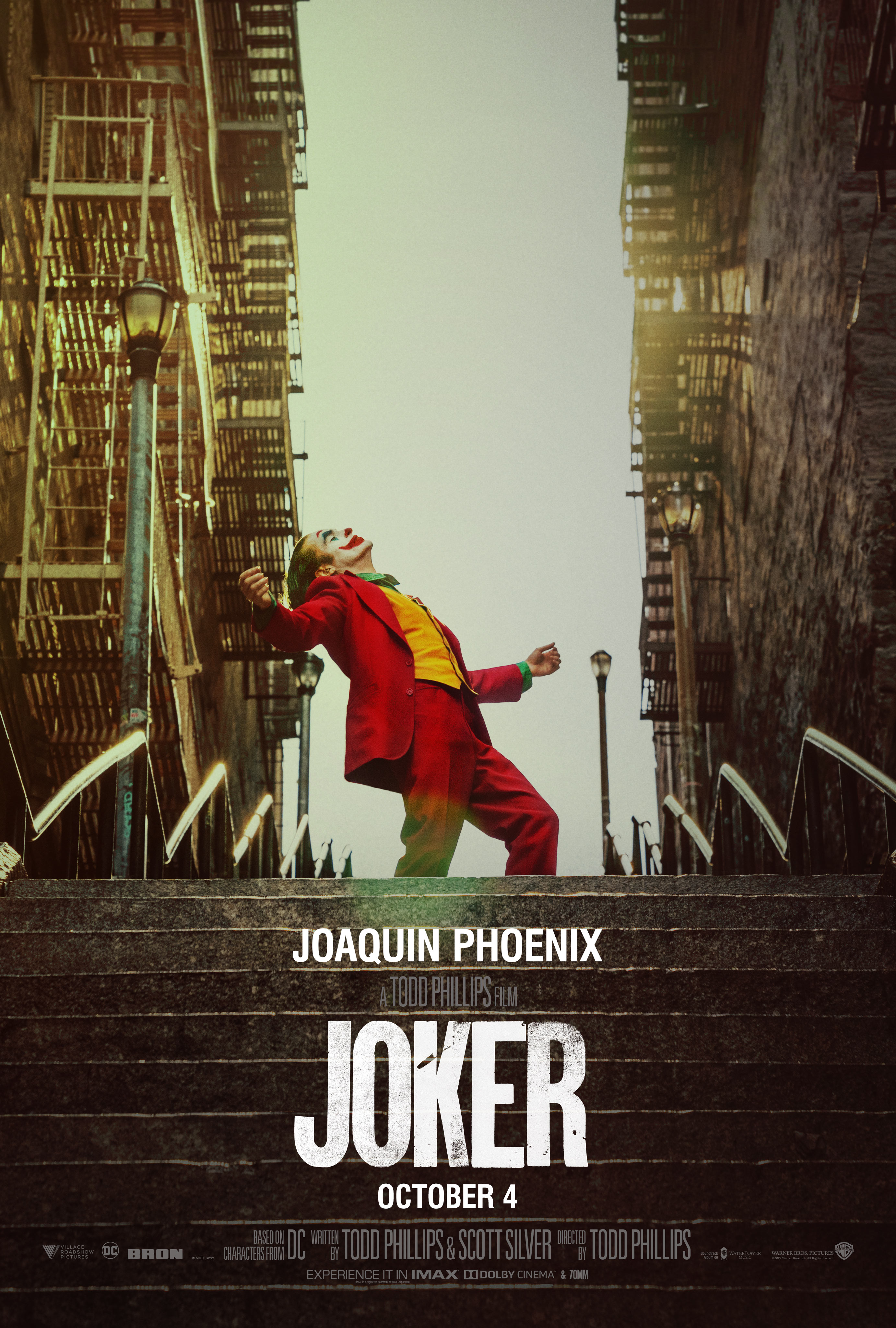
Joker is a troll of a film. It’s main business is provocation: making you feel bad for feeling happy, making you feel bad when you feel bad, shocking you with violence and gore and the indignities of being poor and sick and awkward. It hurts to watch Phoenix move. It hurts to watch him walk or dance or laugh. The rictus of pain in which his body is permanently placed. He is at times dainty and fey, then red-hot and blundering, slapdash, improvisational, weak, timid, meek, then conniving and smooth, impossibly suave and impossibly kind, caring, confident, self-possessed, then unhinged. But his swings don’t come off as random or unpredictable: Arthur is unraveling, shedding the his psychic blocks.
I’m writing this review earlier than the others, because I’m a few (ten) behind, and it seemed like this would be an urgent one for people on the fence. I’ve been following this film for a while now, mostly because of my fascination with Joaquin Phoenix but also because I’ve been waiting for the Suicide Squad/Venom movie I was promised. One that would revel in the amorality of comic book villainy, spend some time in the mud, build the stakes for a confrontation, and push back on the platitudes of 21st century superheroism. That’s not what this is. This is more.
I can see why someone would walk out. At multiple points. Or call this empty and soulless, void of any soul or moral inspection. In some ways the film feels like a polemic, like something that could be watched totally unironically. But I sort of like that it’s missing its compass, errant, rambling, has that sort of colorless feel of a once-vibrant shirt that’s spent too much time in the wash. Mysteries abound, fake news is unconfirmable, the past is a Gatsbian destination, out of reach. At the same time, it’s tidy: dreams die, lines land, set pieces are constructed, and people end neatly. Phoenix performs performance, rehearsal, the molding of self, the telling of fiction, the face he pulls in that hospital scene is so perfectly gleeful.
Every moment of sympathy is undercut by our knowledge, our assumption of the end. Every decision is undermined by the murkiness of his decision-making, the chaos of his moral system, and the slow spiral out of control. And what is most exciting is that it does really feel like a new way to tell stories in a genre that has been painting itself into boxes for the last ten, fifteen years. They’ve scraped everything cheerful and fun out of movie and left the husk of a story, the pockmarked battlefield of the present American psyche, what Friend calls, “a time capsule” movie, somewhat in the same intention as The Dead Don’t Die. It feels like a high water mark for dark, mirthless self-seriousness, in a way that seems inimitable, even as it invites comparisons to classics like Taxi Driver and contemporary analogs that were passed up for Oscar attention not too long ago, like First Reformed (2018).
But even as I mention Ethan Hawke’s performance, there’s something distinctly daring about doing this as a comic book movie, where expectations are so high for such a different brand of humor. Phoenix’s portrayal finally makes Heath Ledger’s performance feel cartoonish where it used to seem dark and threatening. Ledger’s Joker was a talker, his terror was psychological, but Pheonix’s is bottled up, repressed, his terror is social, cultural.
Joker is a movie for people who like movies but hate superhero movies. It’s worth your attention and it’s likely to irritate.


4 Comments