

This is a movie Wife says the main character’s wife Andrea defines correctly when she says (of her husband’s essay), “It’s not really about Mr Rogers.” Mr Rogers feels more like a god character (Wife again), a “personal deity” for Lloyd that gives very little sense of Mr Rogers as a person except for his involvement in Lloyd’s life, which, she says, is fine, but it makes her feel a little like she was lied to. I would’ve felt better if I had known that going in. When was there a picture of Lloyd on the poster? she asks. Never.
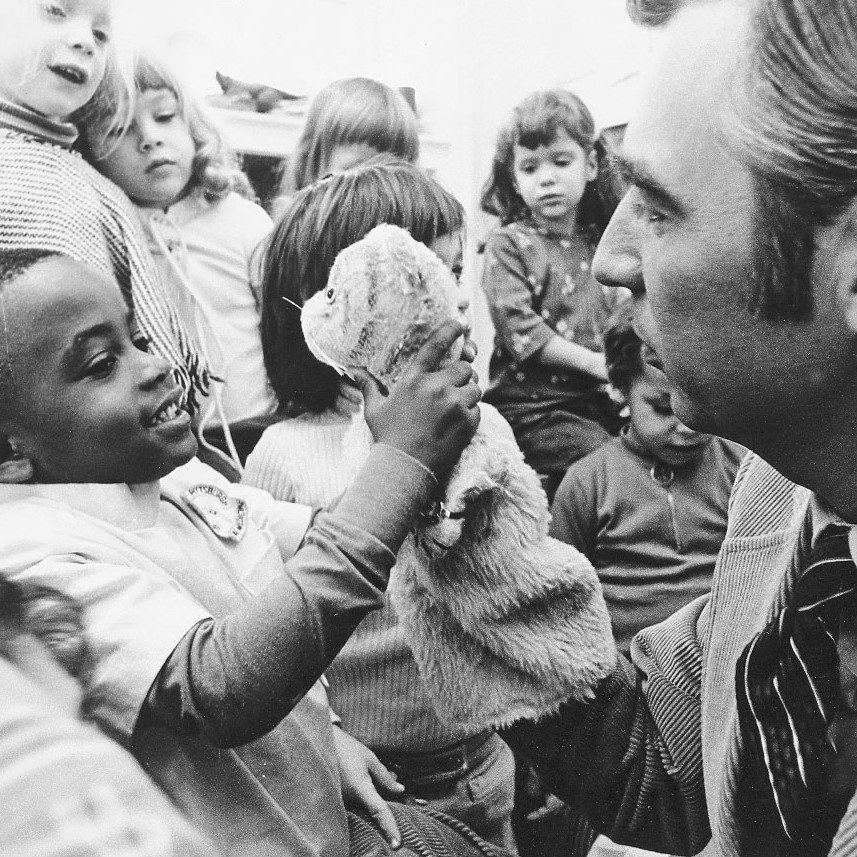
I made the mistake of seeing A Beautiful Day in the Neighborhood with Friend and three women who didn’t grow up in the US and thereby didn’t give a flying fuck who national treasure Mr Rogers was. Last summer, I think Wife and I saw the documentary Won’t You Be My Neighbor back home in Hawaii due to a mix up in the advertised times at Kahala Mall. That documentary re-introduced adult me to Mr Rogers’s fanatical war on cartoons, his painfully slow, contemplative way of talking, his lifelong struggle with his weight, and his complicated relationship with national treasure François Clemmons. After the first scene of Tom Hanks patiently chatting with full eye contact on the camera, Wife leaned over at me and asked, “Is this what the show was like?” which felt like code for, “Is he going to talk slow like this the next two hours?” My favorite moments of this movie are all the ones with Mr Rogers, the way Tom Hanks uses the pauses to let emotion flash over his face and then recede behind his eyes, the tender way Rogers processes new, painful information and prods Lloyd Vogel to share, first with the reveal of his “softball” lie (neat how that word “softball” comes up just as the hardball interviewer comes to knock Rogers off his pedestal). Rhys does a wonderful job of expressing our surrogate frustration with Rogers plodding speech, his inaccessibility, his vault-like pauses. Vogel has no patience to talk to Daniel the Tiger or any of the other puppets, but it’s hard to not to think about the images from the documentary of Rogers using those same puppets to unlock these painfully shy schoolchildren.
Vogel’s resistance gives the audience a chance to laugh at Rogers, whose close confidants and workmates bristle at words like “hero” and “saint.” At the same time, Vogel’s frustration is a little charming, his reaction to his wife’s troubled request, “Please don’t ruin my childhood,” gives his character some depth. Generally, the portion of the film devoted to the reporter’s inner life is what distinguishes this film from the excellent biopic of Won’t You Be My Neighbor, but these scenes that are the most original spin on the story of Fred Rogers are also the most maudlin, unoriginal scenes of the film. They feel recycled and unasked for: the shots of estranged father in his hospital bed in the living room with his son cradling an infant child, a drunk father delivering a loving tribute to his estranged daughter on the night of her third wedding. It feels schmaltzy, cheesy, lazy if it weren’t for the fact that some of it really happened.
The things that make the movie really wonderful are all Mr Rogers: the musical score, the way that the pianos are threaded into the scenes diagetically, the artful recreations of New York City and Pittsburgh, the faithful reproductions of 80s quality kids’ show documentaries, and trippy dream sequences. Hanks has these lovely moments of surrealism (from the very first scene onwards to the restless night of travel to Pittsburgh) that he handles with grace without turning his impression into mockery–despite the fact that this has been done to great effect.
This movie disarms the ironic part of the brain that reflexively puts up a shield to all things pure and kind in this world. Despite the fact that it often trails off into the thicket of a hackneyed father-son relationship movie, it has these moments of artistic excellence when it attempts to recapture the look and feel of the original show while also adapting Rogers’s careful style of speech and mild-mannered demeanor in order to show without telling.


