
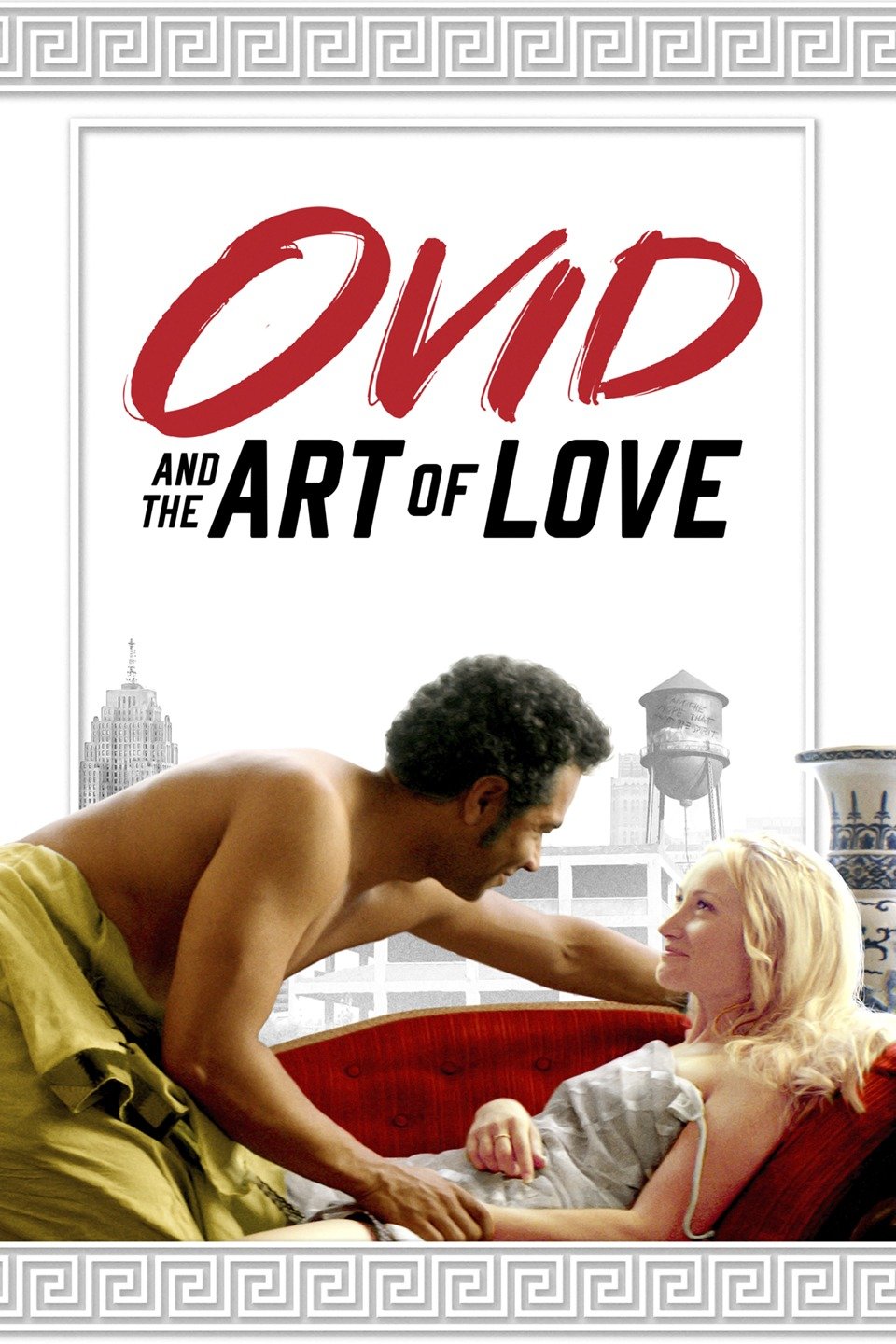
Ovid and the Art of Love is billed as a spiritual sibling to Baz Luhrmann’s adaptation of Romeo and Juliet (1966) in its playful use of anachronism. I liked a lot of the things about this movie and then I read director Esme von Hoffman’s interview with Medium and I liked it even more. This is a movie about the intersection between classics and pop culture written by a classicist and cultural critic who gets what is sexy and subversive and shocking about Ovid’s life story and storytelling. Nothing I’m going to say is better than hearing from von Hoffman yourself, so go and check that out now or when you’re done with this.

Detroit has been the setting for one of many a favorite film in the last few years, the exquisitely barren backdrop of the city on hard times post-Recession externalized the desolation and fragility of our protagonists’ living situation in Only Lovers Left Alive (2015), Robocop 2 and 3 satirize the War on Crime with a dystopian backdrop in the city, and who can forget that lovable pair Pat Morita and Jay Leno in Collision Course from 1989?
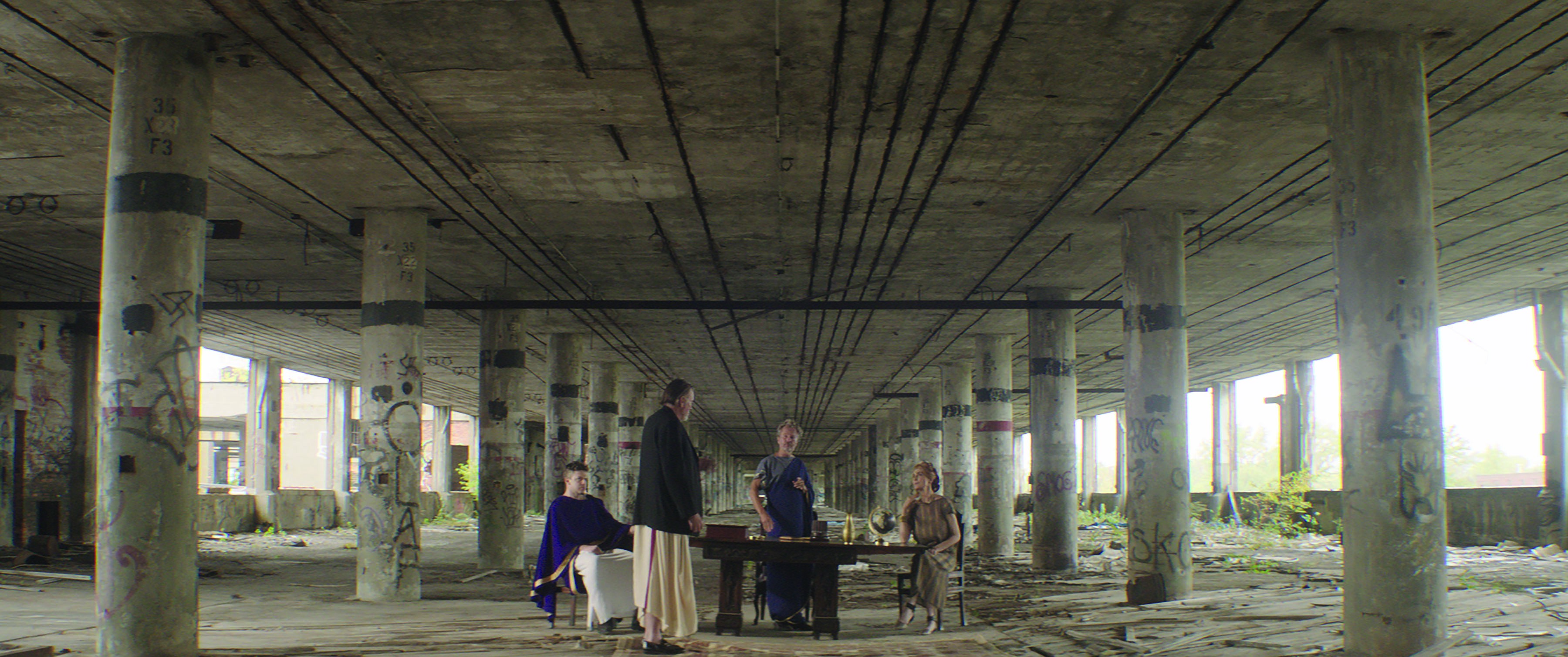
In Ovid, von Hoffman makes magical spaces out of the abandoned buildings, the juxtaposition with the trappings of imperial power read nicely as critiques on American inequality just as much as they breathe life into Roman social strife.
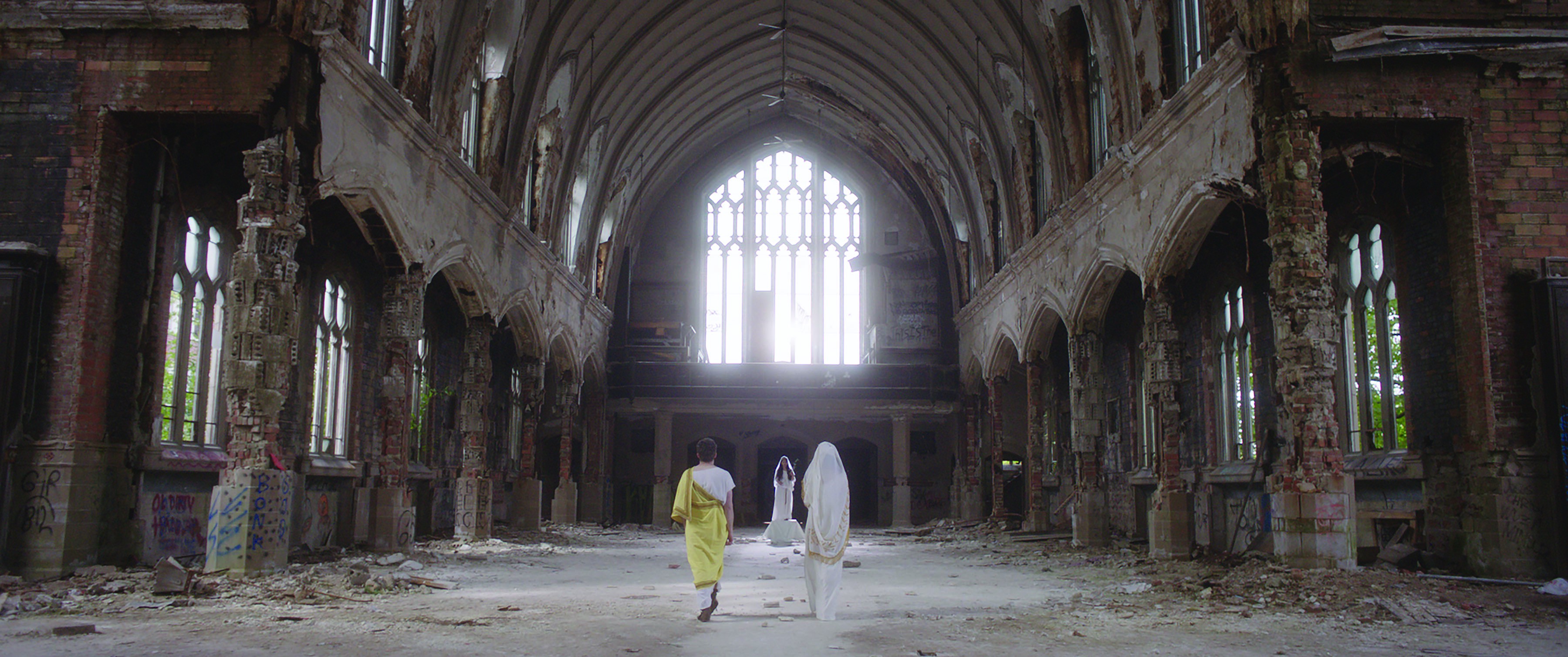
I have recently grown very partial to a set of BBC docudramas which are unfortunately only available with subscription services for the most part, unhelpfully called Rise and Fall of the Roman Empire. As an aside, the episodes, which used to be more widely distributed, used to be slightly longer with saucier, funnier scenes, especially in the Nero episode, but for some reason, when they were thrown behind a paywall, they were edited for time and maybe content, and some of the best scenes have forever been lost. If you have a means by which I can purchase the originals as digital copy, you will make me a very happy man. (The 2003 docudrama of the last days of Pompeii, called Pompeii: The Last Day, is also a standout favorite of mine, for anyone who’s in the market for a fun and educational romp through the chaos and nightmare fuel of that volcanic apocalypse.) I only mention this as a means of filling out what Medium and EVH are talking about when they talk about being phobic to making another British docudrama:
I mean, with all due respect to British productions, which are great, but Britain, at the time this movie is set, was only partially conquered by the Romans, and it was basically an outpost. So, I thought if there was any accent we should be doing it would perhaps be a modern Italian accent, but that wasn’t quite appropriate for the film given it was set in Detroit. But I actually believe that our conception of the Roman Empire has been distorted. So hopefully this movie is bringing us back a little bit more to what Rome actually was.
This is all to say, there has been what those in the biz call “an opening in the market” for something uniquely American to break through in terms of pop classics. I would very much like more of this, please. Since reading Augustan Culture by Karl Galinsky, I’ve always sort of thought of Ovid as a bit of a dweeb and a fancy boy, because, unlike the other heavy-hitters in the Golden Age of Latin literature–Vergil, Horace, Catullus, Livy–Ovid grows up largely after the fighting has stopped, in the peace that was assembled out of the corpses of Caesar’s enemies. Ovid, in my mind, lacked the skepticism of imperial power, a knowledge of the cost of violence in a way that his predecessors were all too familiar. Here’s how Galinsky describes him,
The final representative of Augustan poetry is Ovid. It makes no sense to call him anti-Augustan or un-Augustan; in a way, he is the truest product of the Augstan Age. Being only thirten years old by the time of Actium, he belonged to the generation that knew only the pax Augusta and its otium “with whose sweetness,” as Tacitus put it, Augustus “enticed one and all” (Ann. 1.2). He had no recollection of the travail that produced the Augustan principate or of its precarious genesis. The generation of Augustus, Vergil, and Horace appreciated the restoration of peace and domestic tranquility against the background of the preceding turmoil; Ovid appreciated these conditions for their own sake. They made possible a time of refinement, elegance, and sophistication, all expressed by Ovid’s ideal of cultus. Any hankering for the past is not for him:
prisca iuvent alios, ego me nunc denique natum
gratulor: haec aetas moribus apta meis. (AA 3.121-22)
[The old times may please others; I count myself lucky to have been born now: this time is suited to my manners.]
So far from being an escape from the Augsutan milieu into love or the countryside, erotic poetry is a mere game for him and takes place in a context that lives and breathes the ambience of the city of Rome wit its splendid theaters, porticoes, and other public spaces. They, and public events such as triumphs, are the setting from which the activities of the jeunesse dorée [golden youth] are inseparable. The Augustan milieu goes beyond such material aspects: Ovid, as we have seen before, acutely articulates the tension inherent in many Augustan ideals, such as the Golden Age, and he was and has remained Vergil’s most perceptive reader.
(Galinsky, 228)
EVH does a good job of capturing that carefree, borderline shallow, inescapably millennial quality to the guy. I’ve written a lot about the ways in which movies capture the millennial anxiety of imposture syndrome, about millennial peevishness and social awkwardness, and once in a while I address it without really describing it as a generational trait, because, it really doesn’t need to be an experience we limit to people born in the nineties and aughts (see Hope Gap–I mean, don’t but, refer to it). The way Ovid interacts with the wounded veteran on the streets of Rome after a tryst, But we’re not at war! feels like such a perfect encapsulation of America’s selective attention span to its now-permanent wartime posture, made even more complex and rich with a racial perspective overlayed.
OAA’s take on Ovid’s motives for composing erotic poetry and the implications for how we might interpret the state of America’s own artistic movements are made all the more potent with this assessment by Galinsky of the theme of the Golden Age:
From [Ovid’s] perspective, then, the Golden Age is the antithesis of the actual present…The Golden Age is characterized not by the positive aspects of its own, but by the absence of contemporary practices, greed and war in particular.
Galinsky (99-100)
The Golden Age of Ovid’s mythology does not reflect the present peace he lives in, but rather, his reality is defined by absence. This is a far cry from the young poet ignorant of the blood his forefathers shed in defense of the Republic, a war they lost, and I’m not so sure how much of Galinsky’s analysis is meant to serve a larger argument about Ovid’s Augustan character, but thinking about implications in the film, this seems like a fruitful place to harvest. Ovid thinks Rome, like we America, a little bit hollow, gilded, empty, and everything about the second half of this film strips away the romantic exterior of Rome, with the threat of execution and his final banishment.
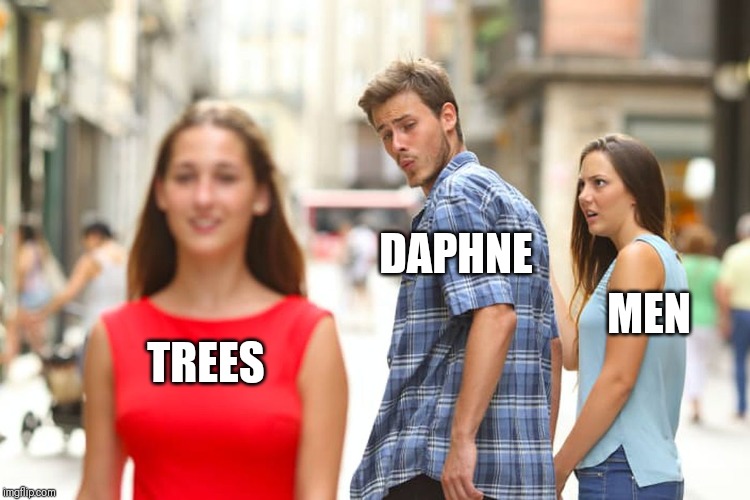
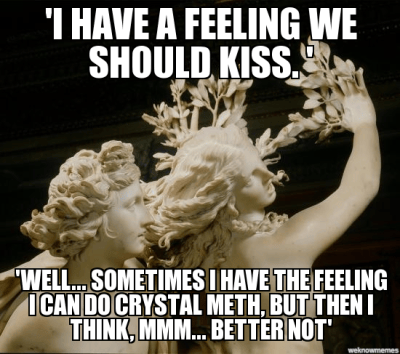
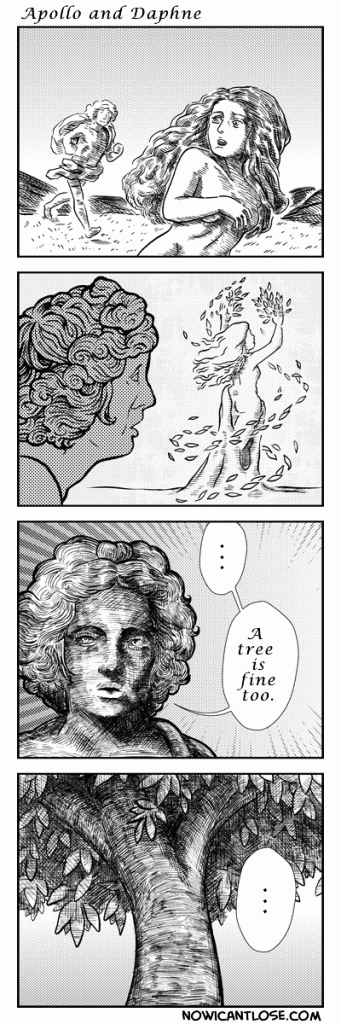
EVH is interested in casting Ovid’s story as one of a slow political awakening, even a radicalization, of the young poet to a political coup led by none other than the granddaughter of the Emperor Augustus. The way she weaves the political nature of Ovid’s relationship with Julia and the impetus for his poetic subject matter does as much as the first four weeks of any intro to Ovid course I can think of. EVH does not shy away from Ovid quoting, even interpreting, his own poetry, which gives us a much richer appreciation for his process and the twisting, mobius-like way that his mind works, though the way that Julia moons over the love story of Apollo and Daphne feels so icky and wrong-headed, compared to the way that the rest of the known world feels about that story.

OAA was an unexpected delight, as was the interview with Medium, and I cannot imagine it not being a staple of every classroom, or at least a cult hit that lives just outside of school, for years to come. The story is quintessentially American, white-hot relevant, and delicately told–sexy, yet sensitive, political, but never self-righteous. The chemistry is excellent, our young protagonist has a strong arc, foibles and all, and the city of Detroit feels like a deliberate decision in a way that most other set locations are an afterthought or a shadow of a shadow of a cliché.


