
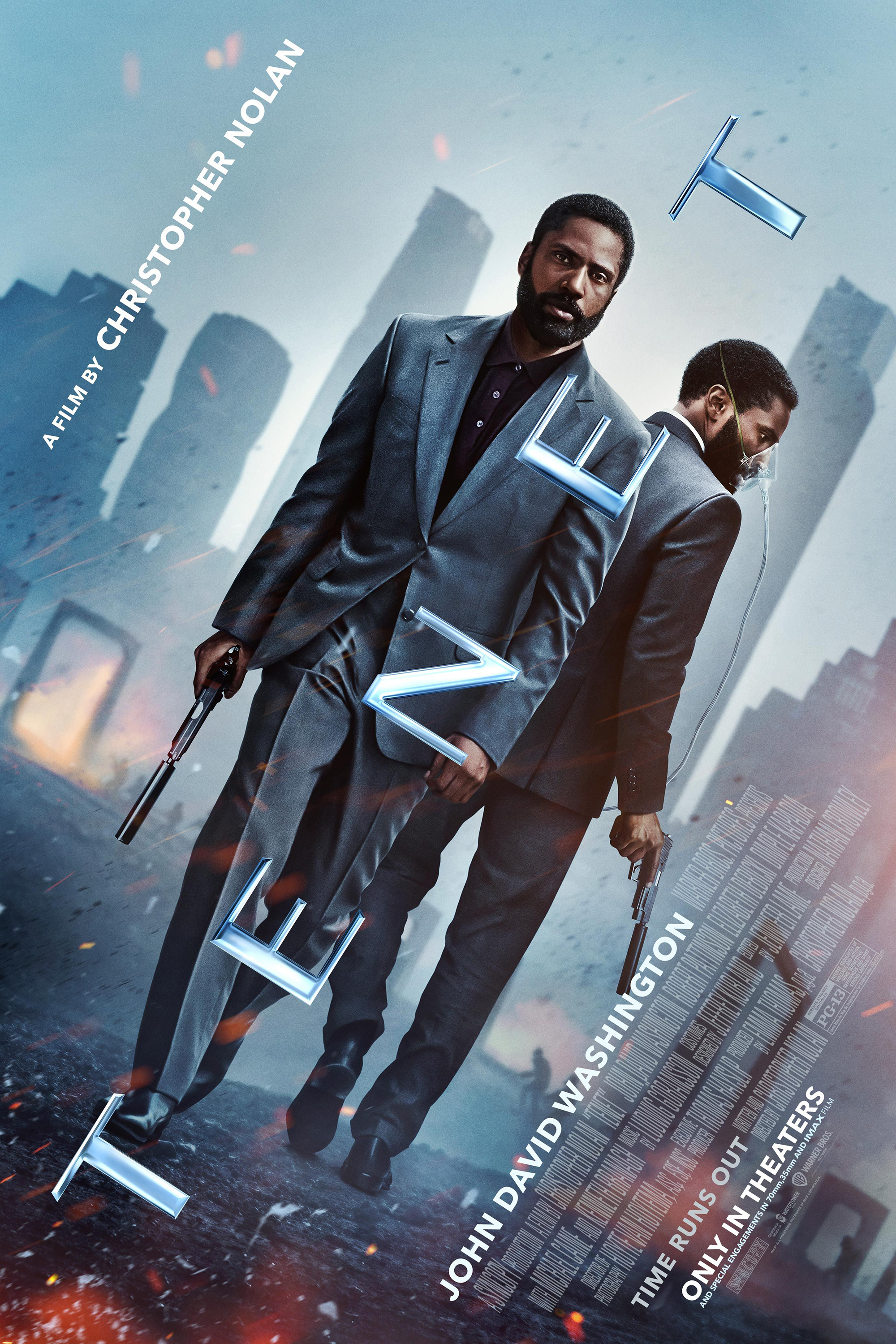
Saw Tenet last week at the Drive In after much anticipation. This movie was supposed to be the tent pole of the summer, the movie that would usher in the end of the Dark Times and signal that it was safe to return to theaters again. So imagine my surprise when I was still clinging to a mask while trying to follow this pasta noodle back to the dog’s mouth last weekend. Not too much has changed since Tenet‘s first pushed opening. I managed to avoid much more than the first 12 minute spoiler of a “trailer” from nearly a year ago, except the brow-raising headline that “Tenet isn’t worth dying for“.
Lest you misunderstand the words that come after this paragraph, I’ll start by saying that the concept for this story was very, very cool (and at this point if you’re interested in seeing the movie you ought to get off this train): a civil war is brewing between the present and the future–and the future is sending bombs to explode us. The film is stuffed full with cool ideas like “temporal pincer” operations, deceptive cinematic scenes that looked like rewound footage in the trailer which is actually just really neat action sequences like bungee jumping up a building. God’s gift to mankind Elizabeth Debicki even finds some ways to make fun of her own height by reaching for the passenger locks with her shoes from the back seat. There are some non obviously cool scenes too like the interrogation scene or the fight scene in reverse, and the way in which the film hides and reveals its own Easter Eggs feels genuine rather than a marketing stunt in the spirit of Clue, meant to maximize the number of rewatches as possible.
Tenet also doesn’t really hold up well to any amount of common sense. The protagonist, John David Washington, is a human plot machine, jack of all trades, expressionless, yet inexplicably attached to the girl he’s just met who can grant him access to a criminal mastermind who is maybe able to receive shipments of deadly future bullets. The bullets themselves? Not actually that important, nor is the whole concept of reversed objects in general. We really just see the concept demonstrated in some cool ways in the first third of the (two and a half hour) movie (which, by Nolan standards is actually a flash in a pan) and then the film morphs into a kind of word salad of dour meditations on the concept of faith and fate interspersed with awkwardly slow and jerky car chases. Everyone seems oddly familiar with quantum physics, except Sir Michael Caine, who seems a little pissed off to have been selected for this movie. His only role is to hand John David Washington a credit card and tell him to go wild, even though the assistance of infinite money becomes less and less necessary the further along into the plot we go.
The protagonist spends a lot of time telling people that he’s just lied to someone and then admitting, inevitably that’s he’s double-crossed the double-crossers, but in the future, which feels frustrating and juvenile at the same time. The moment when the “turnstile” is introduced is basically when I had to turn off my brain or risk having an aneurysm. The fact that the future tech which introduces all sorts of cool visuals also is so phenomenally hard to operate is a source of a lot of disappointment for the viewer. The movie spends a lot of time telling you why things can’t be done or anticipating some of the questions that you’ll have about shortcuts, but it doesn’t actually want to hear your simple questions like, “Why is Debicki’s character so important?” or “Did they just go through the turnstile again?” or “How would we even know if they’re going in the right direction?” or “How many of each of them can there be?
The final battle scene is so concerned about us tracking which group is going in which direction that it seems to forget to include enemies as well. Kenneth Branaugh is a one-note villain, who makes me nostalgic for a simpler time.
Tenet requires you to suspend your disbelief and grind through back-to-back exposition monologues for a majority of the first and second acts, but the payoff is the interesting visual games that can be played with rewound images.


