
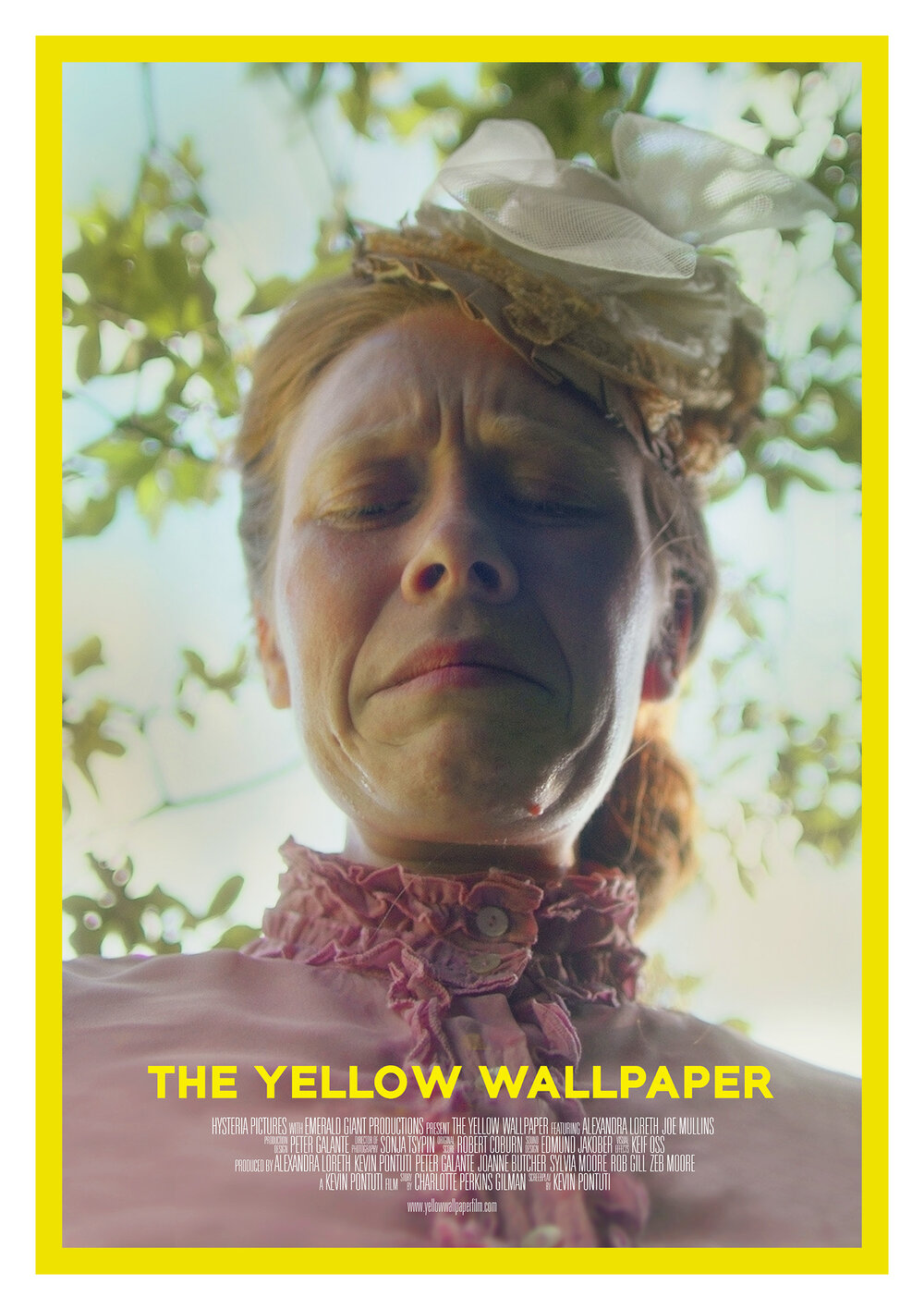
There is something really off about The Yellow Wallpaper. It’s that feeling you have when you make a recipe you loved as a child and you’ve followed the instructions exactly, but it’s not the same as you remembered it. “That lady needs some hairspray,” Wife suggested in the opening sequences of the movie. And maybe so, it seems like just about everyone else in the movie is perfectly coiffed, made up with lipstick and foundation, except our protagonist. Everyone has an accent except her. Her clothes look a little cheap, like she’s wearing a costume rather than an outfit. The periodic voice overs she does sound like she is reading something quickly for a class out loud and cannot be bothered to slow down. Which is a strange note to give her, because this movie moves at a snail’s pace, crawling around from moment to moment without much care for plot or really any kind of additional information. Our main character’s flat affect may be direction given to her as part of the trauma and exhaustion of the central conceit–woman suffering from post-partum depression is mis-treated by her well-meaning physician-husband and waitstaff at a summer home. But that same affect makes for some fairly spare scenes. The camera is always focused on her from about four feet away (Birdman style), which fits for a Blair Witch doc movie, but not quite for the period genre from which it’s borrowing. The lack of wide, steady shots might be contributing to the cheap, awkward feel of the cinematography, but it’s certainly not the only thing that’s holding this movie back from greatness.
There are no monsters in this Gothic horror. No ghosts. No skeletons or corpses. The bit of magical realism that we see at the very beginning is never repeated, which is a shame, because it’s probably one of the more interesting directorial choices. The cloying nature of the protagonist’s captivity and the ineptitude of her fellow women to recognize the origin of her distress make for excellent anchor points for a metaphor for new mothers struggling with depression, but the story isn’t advanced much beyond that. It lingers on her deepening manias without contributing any new ideas or images (unlike a movie like Lizzie or The Beguiled, which isn’t so much about mental health, but does share in the Gothic aesthetic). TYW suffers from a lack of editing. At 100 minutes, it could’ve managed just fine at an 70. The original score and sound are done entirely through synth instruments, which gives off the wrong expectations and distracts more than it adds. There are modern settings where a horror film with static would fit in perfectly, but the type of scares and genre and period of this particular movie don’t work well with that musical aesthetic.
The movie was an unpleasant march through well-tread territory with a trite ending that never tried to say much of anything that we didn’t have a firm handle on in the first twenty minutes.


