
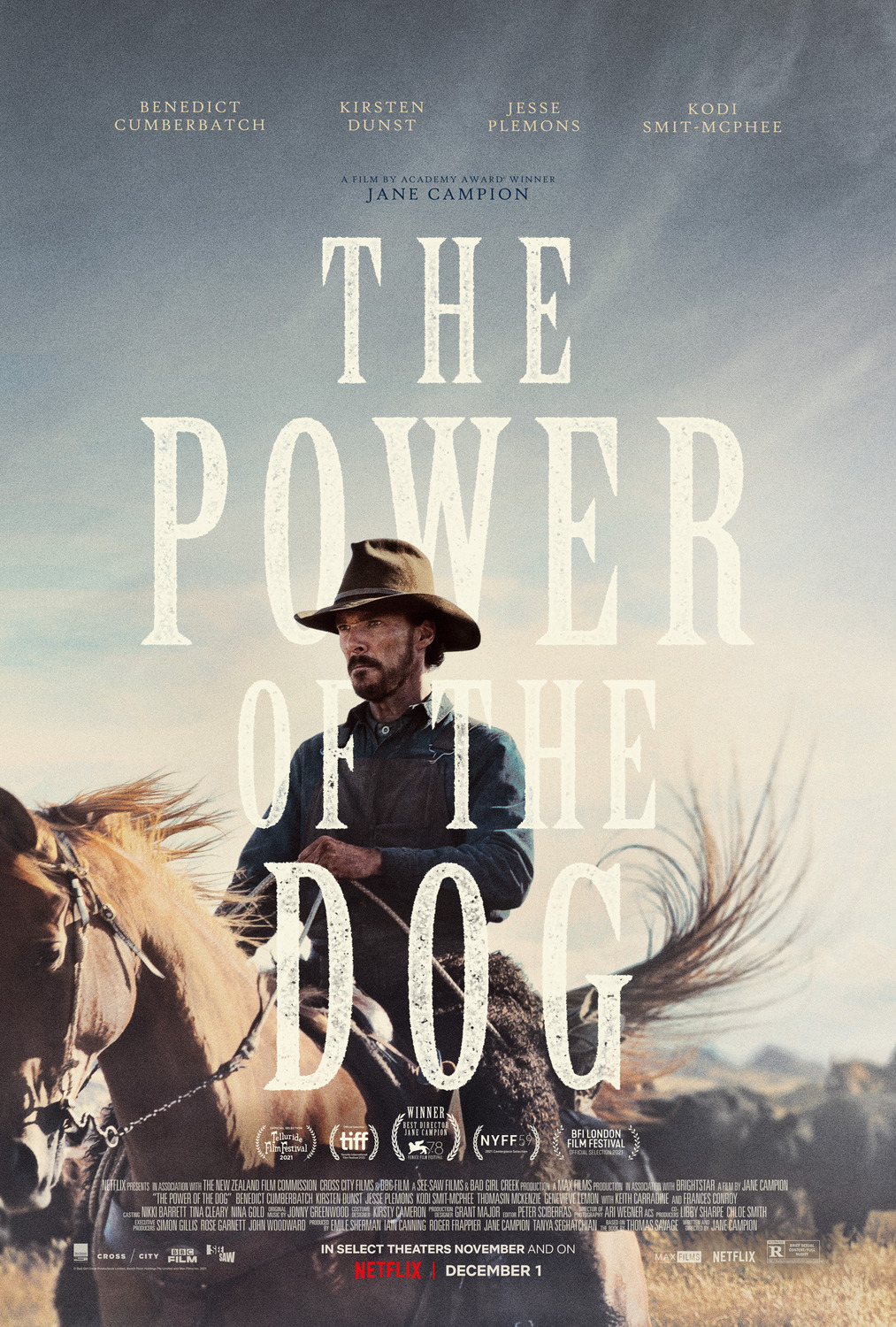
The Power of the Dog made some short lists for best movie of the year, so it’s been on our must watch while doing the laundry list for some time. This past week was that laundry and TPotD mostly feels like what if Phantom Thread and Call Me By Your Name but cowboys. By that I mean, Benedict Cumberbatch and Jesse Plemmons play two estranged brothers (Phil and George) who drive cattle for their wealthy family. Phil especially seems to be grossly underachieving with a Classics degree from Yale (“Does he yell at the cattle in Latin or in Greek?” asks the fucking governor of the entire fucking state).
What I’d gathered from some headlines before coming into this movie cold is that Cumberbatch was going to play a right bastard and he does find some particularly cruel ways to humiliate the gay-coded son of Kirsten Dunst. He regularly denigrates the intelligence of his brother, calls him “fatso” even though he is so obviously starved for his attention and affection. A lot of Phil’s malignancy is tied up in George’s strained silence and his lack of shared nostalgia for their childhood mentor, Bronco, who, it becomes clear toward the end of the movie, is probably some kind of sexual guide for a young Phil. George seems aware of a macho compensation happening on the part of his brother–two indicators, the way he emphasizes how much Phil’s comments hurt Rose and the moment when he cries and explains, “It’s nice not to be alone,” after a good many scenes of him riding alongside his sociable brother. Plemmons’s awkward and repressed George shines in the first two acts, but recedes in the second half of the film in ways that feel a little awkward. Phil’s alarm at George’s inattention to his wife’s alcoholism seems well-placed since he so seldom is around the house where literally all of the business takes place. Once George’s excuse for leaving the manor to visit Rose is gone, his absences feel more forced.
Rose’s descent into alcoholism is one of the turns of the film, one that heightens our disdain for Phil, the way he tortures her over her future, then botched, piano performance. And likewise, her vengeance on Phil, giving away the hides that Phil has chosen to save in order to create a memento for Pete, leads to the second great twist of the film. Her actions, which seem like a Pyrrhic victory at first glance turn out to be a cruel move that forces Phil to reveal his heretofore implied feelings for Pete in the final hours of his time on the ranch. Pete’s offer to help feels ambiguous at first (in the style of Beguiled, maybe?), but upon further reflection, it seems like he has made some steps ahead of time to set this trap into place. We have a clue from the opening voice over that Smit-McPhee is honor-bound to seek vengeance on behalf of his mother. There’s also the rabbit. Pete’s actions put him into strangely similar territory to the gay killer trope of last week’s Titane, but Pete seems to think himself justified, I supposed because one time Phil lisped at him during work and created a hostile home environment for his mother who was on a road to suicide like Pete’s father?
The murder plot which supplants the romantic evening teased in that final shot of Pete sharing a cigarette with Phil is a strong directorial choice and I can see why it led people to look up from their sock folding and nod sagely at the ruthlessness of the Old West and the righteous rage of one wronged gay person, but at the same time, I’m not sure what to do with this brittle war of manners story. Masculinity is crimped and exaggerated and posed and prodded, the sheer wall of words that go unsaid in this film lies heavy over the heads of its viewers, but ultimately it feels like the movie was pulled into too many directions at once without being able to do many of them justice. It wanted to romanticize the beauty of the West, its pristine bounty in which Bronco and Phil find their solitude, but at the same time Phil talks of the Indians who infest the hills and ought not be bartered with. His status as an anti-hero doesn’t excuse the lack of pushback or representation from the native people in the film. It’s about coming of age and discovery of one’s sexuality, but it’s also about repression and the insidiousness of trying to live without being comfortable in your own skin. Phil is smart, gifted, and attractive, but none of that really seems too relevant to the plot beyond the ways in which it prepares us to expect he excels at shitting on Rose in oddly cultured ways.
Thomassin McKenzie is really the only odd man out of all of this. She was so talented and charming in Last Night in Soho and here she is so flat and underutilized.


