
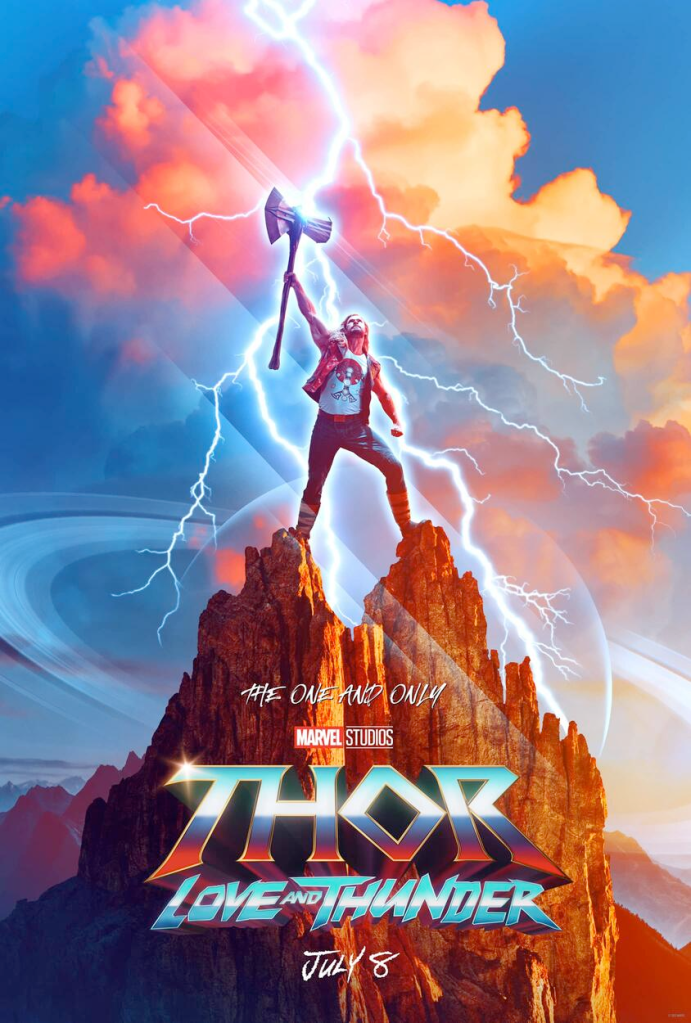
Bingeing Our Flag Means Death right now–which is probably why it’s so relevant that Dana Stevens is posing the question whether Taika Waititi is “overexposed“–has reminded me that what I like so much about the first Waititi Marvel film is that so much of it is improvised silliness in the vein of Flight of the Conchords and Rhys Darby’s innocent wonder.
I came in thinking this was going to be a Hand Off story (in the vein of the most recent Bond movie), where Hemsworth retires and ushers in the new face of Thor via Portman, so imagine my face when (SPOILER) Jane Foster develops stage four cancer (no one is going to suggest that dating the god of thunder might have something to do with developing cancer, I guess) and the mere act of being Thor is actually accelerating her death, a neat little metaphor for Natalie Portman’s own personal feelings about being trapped contractually in the MCU. Marvel’s flirtation with the genderswap storyline is something that was fulfilled more truly in Loki with the variant concept, but in Love and Thunder it feels like there’s a fear of committing entirely to the concept.
One of the things we look out for with buddy, team-up movies, especially ones where the two main characters are playing the same, gender-swapped person, is do these two accomplish anything together that they would not be able to do on their own? Can doubling the number of Thors produce any interesting issues or powers that a single Thor cannot?
There are, I would imagine, a number of insights that a Lady Thor would be able to pick up on that our cis-het man Thor doesn’t pick up on, but Jane’s Thor is too fleeting to have any critiques for the franchise or the hero.
There are other instances in which one senses that Love and Thunder is one step forward and four steps back in terms of the maturation of a beloved hero. The final outcome for Mjolnir–spoiling again–allude to the thinness of the story, restoring something that was broken to its rightful place with an undeveloped Hemsworth. His movement beyond his original weapon, his loss of it, and the shock that came from having to rebuild himself a new weapon, were part of his growth as a character, as was his team-up with the Guardians, which we really only see alluded to in the first couple minutes and the trailers. Instead of playing with that opportunity to cross another beloved property with Thor, the two are quarantined off from one another. (Dana Stevens disagrees with me about the crossover potential and thinks that it would’ve just been a dead period of witty rejoinders, which we mostly got to enjoy in the promotional material and trailers.)
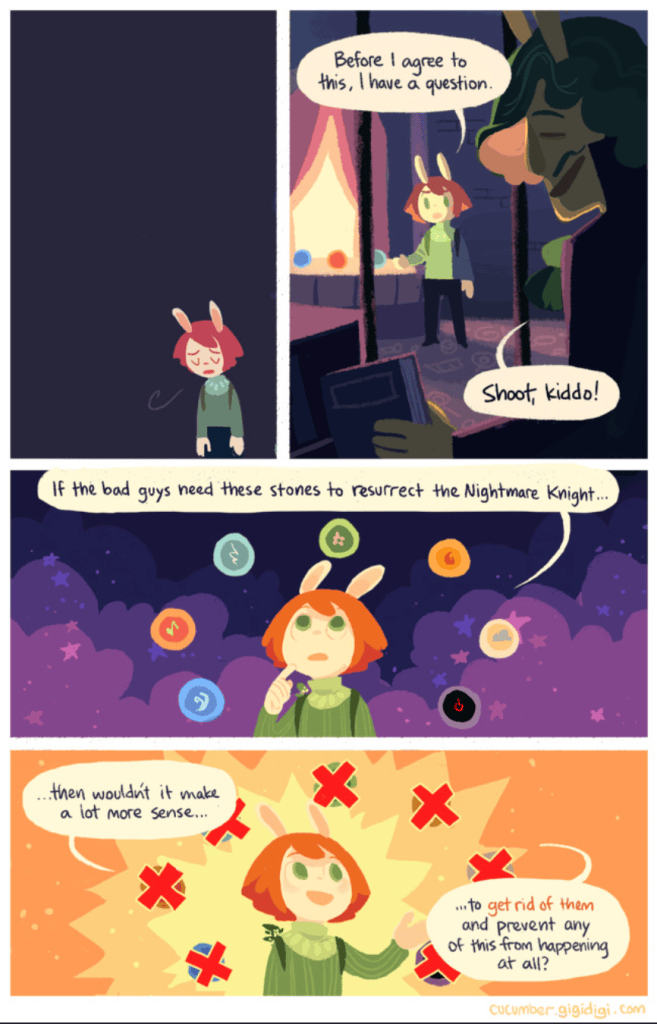
A few notes on religion: the Dragonball of Eternity is at once an incredibly stupid concept and a lovely structure for a feelsy story. Scott Alexander’s short story “Idol Words” did a good job of anticipating the paradox of desires for Gorr. Gigidigi also has some questions directed toward the MCU, which I’ll leave here without comment.
Dais Johnson from Inverse has a fun article critiquing the MCU’s “polytheistic phase,” which got me thinking how rotten Gorr’s luck is that he worshiped a god who (spoiler) doesn’t offer a Valhalla. The chief criticism of Gorr’s anti-theistic philosophy seems to be that gods are hypocrites who don’t have the power or the inclination to protect their followers, and honestly, the vibe is respectable (and not entirely original). Most of my childhood was spent reinforcing these beliefs through Lionhead Studios asking my parents’ microprocessor how easy is it to burst into flames running a game?
But for anyone who’s listening to Thor, we run into an issue of religious credibility: his reassurances to the children in the cage of spikes that if they die, they’ll all go to heaven, his correction to his wayward Asgardian friend that she cannot go to Valhalla if she dies after a battle, his teary farewell to Foster in the cancer ward when he decides to do it all by himself after raising the specter of a very cool team-up battle in which he suggests she too could live a suitably Achillean bargain as an old mortal instead of a premature death as an immortal. (There are actually a couple of these Achilles references sprinkled throughout, like his decision to sit out the battle at the beginning of the movie until he’s requested by his friends. There are some parallels with Hercules too, in terms of the lethal nature of his romantic desires and his ignorance of his divinity or the status of an afterlife, as is the case in the Roman version of his story, Hercules the Insane.)
Thor lives comfortably in the knowledge that his culture has an afterlife, which is really all that Gorr is after. What’s especially rotten is the final after credits scene where the audience is given an omniscient view of Foster entering Valhalla to, in one fell swoop, quell any speculation she might be interested in reprising her role, but also ensuring that Thor’s belief in Valhalla is not part of a mass delusion. And again, it makes Gorr’s criticism of his own religion quite rubbish. The potential for an afterlife exists, but only if you were born Asgardian, maybe? Seems a bit unfair. If only Gorr could’ve seen what we did, maybe he wouldn’t have been so upset about losing his daughter in a random desert due to unspecified reasons that lead him to be angry with his god rather than whatever worldly circumstances put him in that situation in the first place?
So ultimately, some questions about this movie, directed by a much beloved director who was credited with injecting new life into the franchise not long ago: Had I known that it was going to be a farewell movie for Jane Foster instead of a hand-off movie to Jane Foster, would that have changed my enjoyment? Had known that I was going to have to endure the screaming goat meme from Taylor Swift’s music video more than the original gag? Had been aware that Thor can kill a god but he can’t cure stage 4 cancer? Had known Tessa Thompson was going to play second or third banana to Hemsworth and Taika? It’s hard to say. The film will probably remain insulated from a lot of criticism by being marginally better than some of the flops of the franchise this year, and sophomore films are difficult, especially when your sophomore is actually the fourth in the series spanning over a decade–holy hell, I’m old.


