
“Black Lives Matter made visible, through photography, the experience of African Americans, maybe even in the very way that Frederick Douglass had predicted a century and a half earlier. With photography, witnesses and even the victims themselves captured the experiences of young black men who for generations had been singled out by police, pulled over in cars, stopped on street corners, pushed, frisked, punched, kicked, and even killed. In 2014, police in Ferguson, Missouri, not far from St. Louis, shot and killed eighteen-year-old Michael Brown in the middle of the street. Witnesses captured the aftermath on their smartphones. All over the country, witnesses captured one police shooting after another. Police shot and killed Tamir Rice, age twelve, in a city park in Cleveland; he was carrying a toy gun. Minnesota police shot and killed Philando Castile in his car; he had a licensed handgun in his glove compartment and was trying to tell them about it. Castile’s girlfriend livestreamed the shooting. ‘Social media helps Black Lives Matter fight the power,’ announced Wired. Yet legal victories eluded the movement. One killing after another was captured on film and posted on the Internet, but in nearly all cases where officers were charged with wrongdoing, they were acquitted.”
767-68, These Truths, Jill Lepore
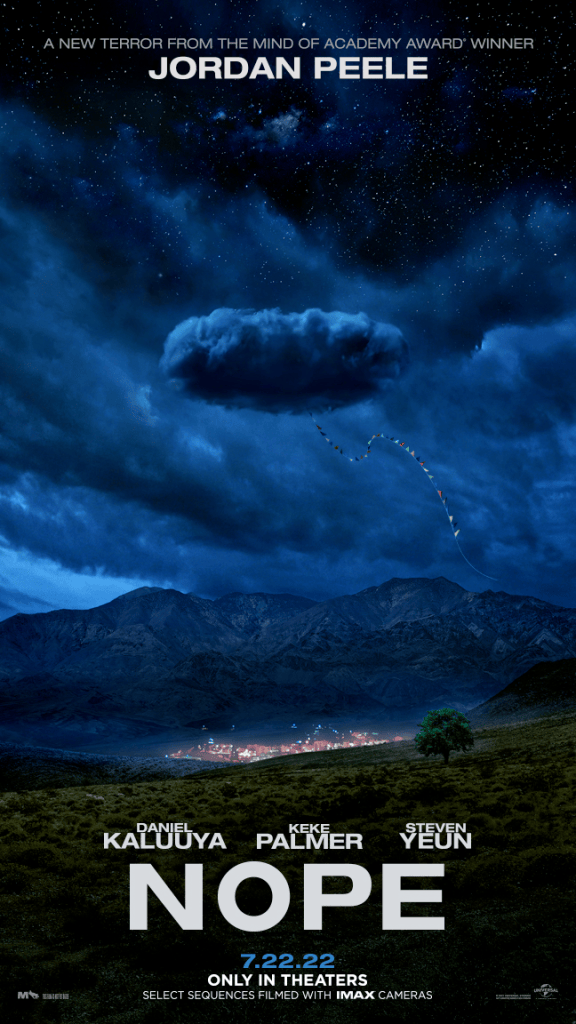
Jordan Peele’s third film Nope was one that I had been anticipating for a long time. Peele is the crown prince of Afro–surrealism, something that we’ve been discussing for a while in these parts. Brother and sister-in-law had booked out time to see it with us, even got my parents to come along as well. Friends were in town to see it with us too. We left in a daze, trying to piece together the tenor and the vehicle, make meaning of the monster, which is when I turned to friend and then Dad and said, “Don’t look at me like I’m stupid when I say that was all about police violence.”
Mom at the house afterwards pushed back, “I thought it was just a movie about a monkey, wasn’t it?” or Friend who’d seen it elsewhere texting me to say, “Commodification of Hollywood, I like, but police violence seems like a reach.” So I’m here today to talk a little bit about HOTS’s method of deconstructing horror so as not to reduce everything to allegory, while also wondering and, honestly, hand-wringing about the more difficult threads of the movie, the things that defy explanation and the political/aesthetic continuity in our read of Nope.
I’ve written before in relation to Jordan Peele’s last movie about the way in which horror films take on the anxieties of their cultural moment, and specifically about the cuckoo as this century’s horror monster of choice. My point there was not to nitpick about how each image and scene perfectly alludes to an identity issue (e.g. the black experience in America, growing up mixed race, etc.) nor to a political or social issue (e.g. black celebrity, 9/11, the election of Barack Obama), but rather to talk more broadly about the creative process of forming and structuring horror stories. Afro-surrealism, like magical realism, relies on the amplification of the mundane through visual metaphor. Peele’s horror films follow that logic: Get Out contains within it autobiography, its director the mixed-race child of a single mom musing on the shallowly buried white resentment held by white liberals, while also cheekily nodding to a number of horror tropes from Peele’s past favorites; Us, as we’ve attested to, leaves more to interpret and wriggles away from tidy explanation, but leans fully into the cuckoo trope; Nope strikes a balance between those two films in terms of its love of horror tropes to move the plot with grounding in an exploration of politics.
The historian Jill Lepore sees a connection between the power of the camera and the struggle for racial justice in America. Nope’s Em and OJ Haywood are deeply connected to the origins of (black) cinema through their family’s business as animal trainers and stuntmen. Director Antlers Holst is seduced into coming to the ranch to find what he describes “the impossible shot.” Lepore is not confused about what shot black folks are trying to record, whether its the 1850s with Frederick Douglass or the 1990s with Rodney King or the 2010s with Philando Castile, Mike Brown, and Treyvon Martin. It is just as soon, Nope seems to say, you’d find irrefutable proof of UFOs on film that you’d find irrefutable proof of a police officer killing a black man. “What do you call a bad miracle?” OJ asks his sister as he struggles to explain the phenomenon, that rare and random evil exacted upon unsuspecting victims.
I think what makes the jump from UFO footage to police footage so hard for some people is that Nope does not always appear a particularly violent movie. The monster doesn’t kill in a very gruesome way compared to other monsters. The monster’s not particularly subtle, as referenced by the way in which everyone seems to be saying “Nope” whenever it looms over or near them before dodging out of the way. The violence perpetrated by the monster manifests as disappearances at first, bloodless and off screen. There are some issues with shying away from thinking about the movie’s interest in police violence as metaphor, however. Nope is bookended, after all, with the story of Gordy the Chimp and his vividly violent actions. One’s reaction to the cause and purpose of Gordy’s violence holds the skeleton key to a lot of the metaphors in Nope, and we should think these through in a moment. But also, we have the extraordinary image of Em riding through town at the end, wrapped in police tape, releasing a giant (white) sheriff balloon to pacify our monster. We have the images of the python consuming its prey whole in the background during the phone conversation with Holst. We have the threat of violence from our little Martians in the arena. Violence lurks in the background of every scary moment of Nope.
The issue with denying police violence as a vehicle for talking about this movie, or the danger in trying to cleave more conservatively by claiming the film’s interest in a generalized and apolitical violence, let’s say, is that those readings of Nope divorce the film from its cultural context, try to universalize a film that is influenced by race, identity, and politics. To say that Jupe Park’s status as the lone Asian in his cowboy amusement park is inconsequential to the reading of the Gordy plot or to say that OJ and Em’s experience as the first black-owned stunt horse ranch in Hollywood does not contribute to the way that they perceive the threat posed by the monster is to ignore some vital information we’ve been provided.
We don’t sit through two hours of a Harriet Tubman action movie and come out saying, “Wow, that movie really drove home how grateful I am that I am not a slave,” or the entirety of The Green Book thinking, Mahershala Ali’s character really speaks to my struggle. Or, if we do, hopefully we have a friend who, upon hearing that, calls up all of their other friends and talks shit about that person for not having some perspective about the cultural distance between the audience and the subject. And this isn’t a case of This Film Was Not Made For Me (see limp criticisms of Turning Red or Crazy Rich Asians or whatever Top Gun: Maverick was), the sometimes self-aware moment that someone recognizes that their aesthetics are not culturally grounded in the movie they’re seeing, and the more often than not recognition that you’re not a thirteen year old queer girl or a six year old child who likes Zach Galafianakis. (We should take a moment to parse the difference between these experiences and whatever the fuck was going on in Licorice Pizza that gave license to a bunch of people to laugh at a truly weird fixation with Paul Thomas Anderson’s ex-mother-in-law and biracial couple stereotypes he just made up from the 70s.) Maintaining that there is a racial tenor behind the unracialized vehicle of Nope is not a matter of “reading too far into a movie.” It’s an attempt at trying to put yourself in the shoes of a more particular, contextualized reading experience.
Thinking about the monster as a way of talking about police violence is not easy allegory and I think that probably the most interesting questions come from trying to wrestle with those incongruities, so I want to just sketch out the outlines of a few explanations for the metaphors through this prism of understanding the plot before posing some more specific questions.
So the monster is… police violence? Why does it seem like the secret is not making eye contact? Wouldn’t it just go straight up to OJ and Em while they’re minding their own business, ask for their driver’s license and then shoot them in the head?
I get from your tone that you are more of a literalist, but bear with me. The monster is predatory, “possibly even territorial,” and it chooses its victims based on who is ignorant or brash enough to make eye contact. OJ is forced to adopt a submissive posture in order to avoid punishment, but the Haywood’s goal is ultimately to capture the violence committed by the monster without themselves becoming the target of it. The best way to stay safe is to keep your head down and not get involved in other people’s (and horses’) business.
But some people want to become the target of that violence. Kind of masochistic, no? That dude with the mirrored helmet, TMZ, who asked why OJ wasn’t filming his death for the likes? That doesn’t seem very consistent with the struggle for racial justice.
Agreed. The confluence of internet celebrity and the consumption and commodification of black violence don’t feel super related, but that doesn’t mean we need to take TMZ at his word. He clearly misunderstands the (virtuous) reason(s) for capturing footage of the monster just as he misunderstands the actions of OJ’s presence in the ranch. It might be a function of his privilege through race, as with Holst’s death impulse, but it might just be a misunderstanding of motives. TMZ’s a foil to our more precise understanding of the filming of this monster.
It sounds like you’re just using the characters who agree with your set of preconceived notions about the metaphor and saying everyone else is unreliable. The monkey, for instance–
Gordy the Chimp.
Gordy, sure. If Gordy is police violence, is he the police when he’s knocking the shit out of that girl’s face after the balloon pops or is he a black person, because that seems pretty racist and also does a terrible job of explaining the nuances of police violence either way?
Yeah, I’m with you on that! Gordy is such a wild card. It’s clearly the case that Gordy is supposed to be scary because he’s so unpredictable and yet he’s lashing out because he’s scared. The same thing happens to Lucky on the commercial set when the crew is more interested in getting their shot than they are with safety. It’s maybe also the case that Gordy is more important as a way of thinking about Jupe Park as someone who has not fully internalized and worked through the trauma of witnessing violence. He mediates it through jokes, through a rehearsed story about a SNL sketch. The violence isn’t televised, except to (us, the) audience, yet we see the uncurated version of the violence, blood splatters and all. He wants to pass it off as a funny story even though he clearly feels a lot of guilt about not helping his costar who’s badly disfigured from the incident. (She figures prominently in the trailer and you kind of think that because of the juxtaposition with the crab footage from the documentary film that the monster sucks people’s life if they look at it or something, but I honestly have no fucking clue why they made her disability such a big part of the film, except as a kind of cheap scare when we think maybe the aliens are walking among us in plain sight.)
So, Gordy is confusing to you too? He doesn’t obviously signify something consistent with the rest of the movie?
Yeah, Gordy seems like the central anxiety of sitting by while watching someone else catches hell when you could’ve have spoken up or tried to help, but beyond that it’s really icky to try to piece together who or what Gordy represents. Which is okay, I think. I don’t think Gordy needs to have an answer. I think he can be part of the animal theme while also not excusing police or claiming violence criminals are just scared animals or whatever. That fist bump was creepy as fuck though, wasn’t it?
Nightmare fuel.
Before we get too far away from Gordy, I do kind of wonder if it’s part of the question of what you call a bad miracle. Trying to explain Gordy’s temporary madness is different from acknowledging that from the victim’s perspective, there is no logic or reason for why they have been targeted. Wrong place, wrong time. Friend mentioned later that the way in which Jupe dies is very similar to the way that Gordy was set off in the first place, which is to say, an entertainer has misjudged a wild animal in an attempt to commodify a force that is unpredictable. I think that’s cool perspective. I like the mirror scene. I also think that it gives the monster and Gordy a raw deal, the sweetness of the fist bump and the way in which he comes out of his fugue before his violent end is poignant, but I just don’t know what to do with it in terms of fitting it into the “police” part of police violence.
Sam Adams at Slate is interested in that floating shoe.
Sure, the shoe. The shoe!
Any thoughts?
None whatsoever. I do about the nickel though.
1978 Nickel, kills OJ Sr.?
At first I wondered if the date was significant. I don’t know if it is? Jordan Peele is born the next year, so maybe that? But also if you look at movies that were made in 1978, there’s this gem:
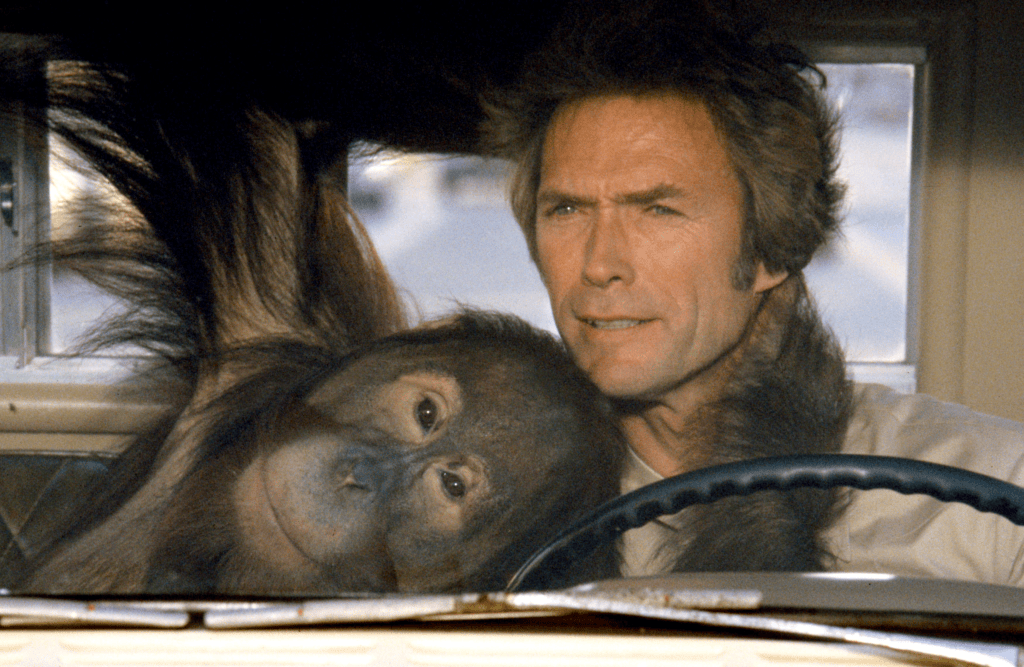
This is also the year of the first Halloween. And in terms of UFO movies, we have Invasion of the Body Snatchers, The Cat From Outer Space, which looks just delightful, and one of many low budget sci fi films that tried to take advantage of the Star Wars craze from the year earlier:
So you think the nickel is a nod to The Cat From Outer Space?
A Cat, actually. But, no. I think it probably has to do with Thomas Jefferson as a founding father of ill repute and the paradox of American freedom. Otherwise, why a nickel and not a penny or a quarter? And the keys, what’s their deal?
It sounds like you still are processing some things.
I would say that’s about right. If anyone has any good shoe theories or can talk me through some of the music choices, I would be really grateful.


