
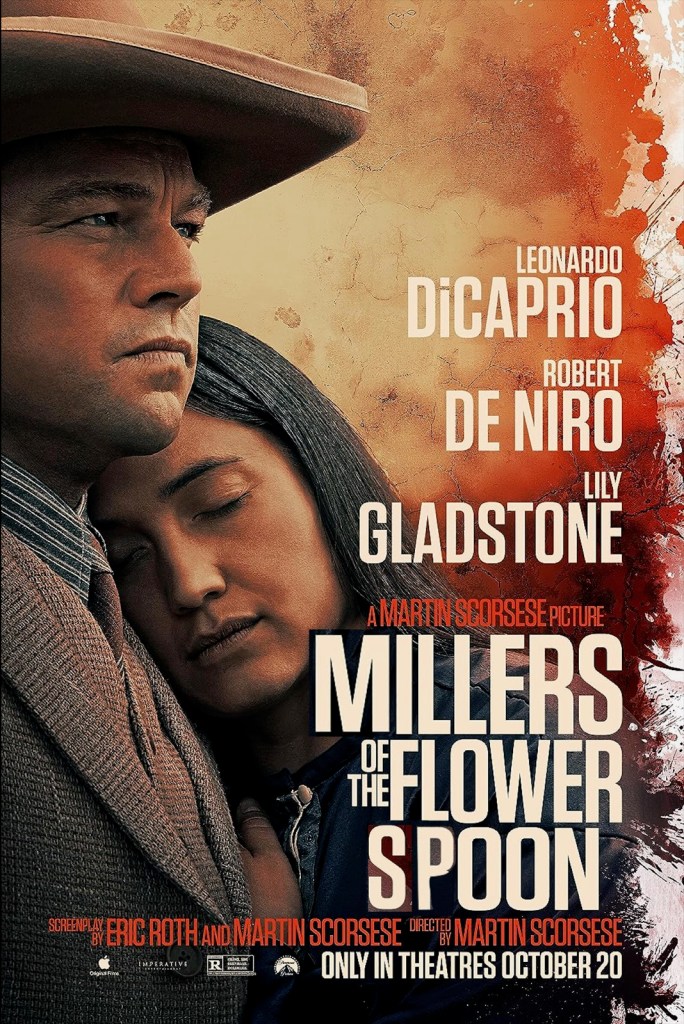
Completed the first half of the next Barbenheimer, Taylor Swift’s concert movie meets Martin Scorsese’s adaptation of Killers of the Flower Moon, Eras of the Flower Moon. Actually quite difficult to complete, because Eras is only open evenings on weekends and KotFM is so long that it crowds out a lot of the available slots even if you catch the earliest showing.
Talking to Friend before the movie, we concluded that the entirety of my experience with Scorsese movies was Taxi Driver, which either makes me the worst person to talk to you about KotFM or the most pure, clear-eyed viewer one could imagine. Like those people they find on islands in the Pacific who still think they’re fighting in WW2 or whatever. Anyway, I think I get the gist of the story? It’s a cuckoo story, right? With a reverse white savior POV? Leo has been kinda forced kinda fallen into a marriage with someone his own age for once in his life and when he realizes this he wants to kill her for the money and run?
I guess I don’t understand why this movie wasn’t edited down to an appropriate length? What was the purpose of the third act in which we mull over all of the action of the previous two acts through a courtroom? Nothing new is added in the jail or the legal proceedings except some celebrity cameos and a kind of unnecessary child’s death. Don’t get me wrong I don’t mind a long movie (and as I say that I’m thinking back on all of the long movies I’ve resented sitting through in the past few years), or even a movie marathon, but I am sort of intrigued by what appears to be the signature directorial bloat of Scorsese.
I’m always at a loss for what to say about biracial marriages as they’re depicted on screen. This movie is all about biracial marriage and especially the ugliest forms of it. We’ve talked a little about this in the past and I think if you want to dive into the Hawaiian equivalent of KotFM, you can’t start better than the wonderful This is Our Hawai`i podcast hosted by Russell Tsubiono and producer Savannah Harriman-Pote.
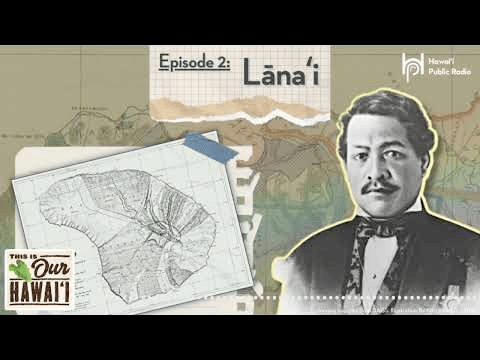
(And while we’re going down this road together, I think the incredible Sarah Vowell, whom you’ll remember as the voice of Violent from the Incredibles movies, wrote a book called Unfamiliar Fishes that expands in part on the erosion of Hawaiian land rights in part through crooked business dealing, illiteracy, and shady interracial marriage schemes.)
There is something so strange and sickening about the way that the white men in this story grouse over the bloodedness of their wives, and that is clearly part of the point of the story, their detachment from the relationship itself, their avarice, the openness with which the Osage women talk about their marriage prospects with white vultures, and the dwindling of their tribal heritage. The way in which Molly and Earnest learn to speak and even argue in Osage to one another after the initial courtship in which Earnest catches a few words and impresses her: “You just say coyote right there.” There are few relationships between Indian and white in KotFM that are without some kind of ulterior motive. The one truly good guy I can think of is stabbed in an alley on his way to DC. And maybe another is a lawman from the Bureau. But I don’t know really what to do with that, the absence of true love, the rotten core of these relationships as an explanation for the withering of the Osage in the present day.
Friend sent me an interview with Reservation Dogs star Devery Jacobs the following day to talk about the way in which the representation of Indians in KotFM leaves something to be desired, and I see it. I see the relief and interest in an immersive experience that takes so much care to represent language and ritual and culture of the Osage, and at the same time I see the (potentially generational) divide among Indians who are attempting to break free of the historical drama straitjacket. And there are so many options, right? Longmire’s writers room and Rutherford Falls all give space to a new crop of Native American actors who are attempting to tell new types of stories and be new kinds of heroes. I get the frustration, so I see why this story feels important and also so limiting. “Lily Gladstone spends a lot of her time in this movie sweating in bed,” I told Wife when she asked if the movie seemed deserving of best picture and best actor noms.
So, generally I recommend this as purely an exercise in seeing if you can complete the full Eras of the Flower Moon double feature and not really as a standalone. KotFM is uneven and rambling. If it’s truly Scorsese’s “masterpiece” as some critics have suggested, the book it’s based upon is surely a more satisfying and complete story.


