
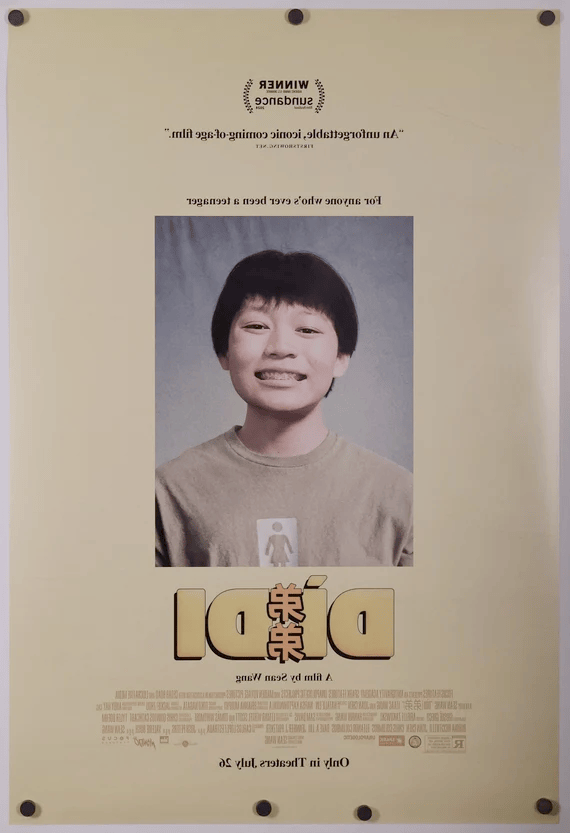
This coming of age film about a second gen immigrant kid from the Bay Area in the 90s checks a lot of boxes for what ought to be a must-see film in my eyes. It made it onto some Top Films of the Year lists which makes me think a lot about where it fits in the pantheon of nostalgic coming of age films from the decade–movies like Lady Bird or Everybody Wants Some (Snack Shack really needs to have a slightly wider audience so that someone can weigh in on whether its out of bounds for me to even mention it in the same breath as these other movies), which are as much about capturing the essence of the time period as the struggle of surviving childhood (and I suppose it’s technically true that Licorice Pizza falls into this category but it’s so awful it feels like it shouldn’t really be mentioned except to say that it’s not worth watching for its commentary on childhood OR the 70s; and while Priscilla might jump to mind as occupying the two categories nicely it also is a biopic so it doesn’t quite feel fair to slot it in with the rest of this fictional stories), less so Edge of Seventeen, Booksmart, Eighth Grade, Flower, and Egghead and Twinkie, which are definitely clever meditations on growing up, but forgo the nostalgia of an earlier age. I sometimes wish I had seen A24’s 90s just so that I could say that Didi is reductive and derivative
A Friend saw this in theaters during its limited run while I had been dragging my feet in the dog days of summer (writing this fully a season and a half later in December, hi!) and I think I probably caught it the final Wednesday of its wide(ish) release before it evaporated into the aether. I think maybe Wife and Friend had seen in the previous night and it redirected the film I thought I was going to see to that one because of her strong recommendation. I think I probably ended up seeing this film with two other couples in a mostly empty theater and left feeling a little bit empty, not quite melancholy, but confused about the ambient emotional picture the movie painted. It has such a keen eye for the way that online interactions are so easily facilitated, mediated, and sabotaged; the viciousness of early social media in the pre-visual, friend-centric age, but the anxiety about missing cultural signifiers, the worry about feeling left out of meme-sharing with a girl feels kind of hollow. All the scenes about the garage Chinese school for math don’t really land for me, but I don’t know to what extent they’re really intended to land for any audience.
Didi’s passion is making skate videos and the gap between his passion or his taste and his artistic skill is vast, something that only slow becomes evident to him in a bit of masterful focalization. His mother is preternaturally calm about his pursuits, in part because she herself is an artist who’s had to endure critical questions about her vocation, but also because she seems to contain an infinite font of letting her children growing into themselves. It seems to manifest itself in some pretty wild ways, like not expending energy searching for her runaway daughter after multiple days missing, but also the stresses it places on her to be for all intents and purposes a single mom letting her children run rampant culminate in an unmotherly display of domestic violence(?) that while not uncommon for the culture and time feels uncommon for the character–which sort of redeems her otherwise patient, cheerleader-type caricature.
There are so many things that do land: the way that one’s personality and identity as a teenager feels imitative and aspirational; the painful act of learning what to say when you want to talk to someone you like; the ineffability of childhood; watching Didi’s sister grasp for the right words when telling her brother about how she’ll feel when she leaves for college the following year; the way he borrows her clothes; the feeling of alienation toward your peers; the way your brother goes away to college and writes you a letter with a hundred things that are important for you to remember and how you gave that to your brother when you left and then never found out if it still exists anywhere; feeling like you’re punching above your weight class with the friends you’re hanging out with; leaving the house during a heated argument; not having your dad at home; feeling like you’re growing up too fast and too slow; a mom trying to understand why her son is watching webjunk; a mom trying to show her son her art submission; the painful awkwardness of hanging out as a third wheel in middle school; the tenderness of a mom with her son during embarrassing personal lows.
So, while I’m not sure that this film has anything especially original to say, in fact, I think that it’s guiding principle is a unifying theory of childhood (“remember when this happened to you too?”) rather than a peculiar, other-izing identity-driven storyline, I do think that it’s an interesting hyper-local story that might deserve a revisit in a few years if this first time director-screenwriter Sean Wang has more stories to tell.


