
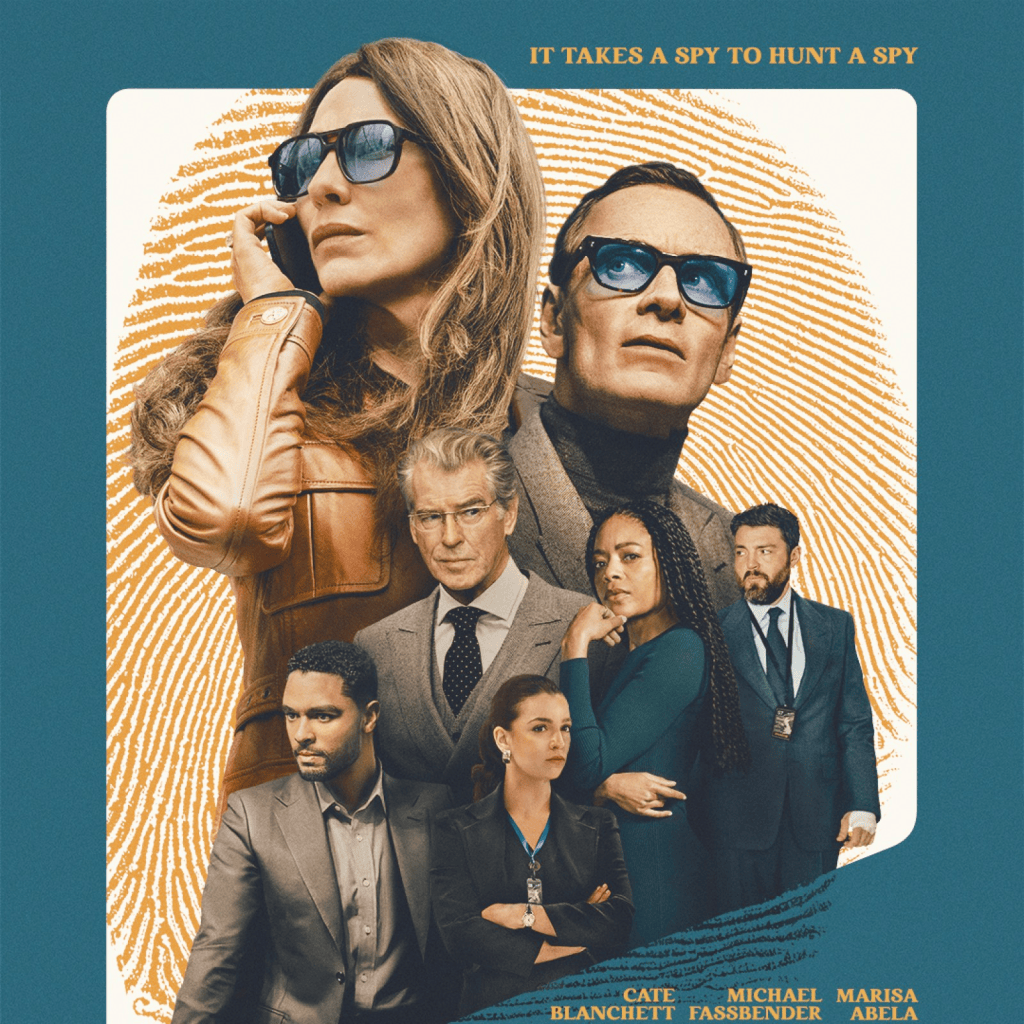
Steven Soderberg’s spy thriller Black Bag is sort of amazing in its scope and genre. It feels more like an Agatha Christie one shot than an epic action movie, equal parts office place drama and cat-and-mouse detective noir. Fassbender and Blanchett are intense and brilliantly painted characters whose methods and mutual admiration for one another’s craft makes watching them yes-and each other really satisfying. There’s a structural conceit to the movie in which it must be resolved within a week, so we get to jump around from day to day which feels very 24 meets The Office in some ways. The stakes feel low, the (spoilers) ultimate victims of the rogue Stuxnet-like virus getting out of MI6’s hands is that it’ll topple the Russian government and end the war in Ukraine by causing a meltdown at a nuclear site. So, unlike its contemporaries in Mission Impossible and the like, the world isn’t really in danger for the most part, so much as there would be a whole lot of paperwork to do over the weekend if everyone doesn’t figure out what’s happening.
Black Bag was marketed as an erotic thriller, and as nice as Blanchett and Fassbender are to look at, this is a bit of a misnomer. There are a lot of amazing one liners and two or three dinner party sequences that are absolutely fabulous and go on for a lot longer than you’d expect. The suspects swirl around each other in different permutations in the film giving everyone ample time to have motives and overlapping stories that deepen the emotional stakes if not always the threat to human life. It’s more Donald Glover and Maya Erskine than Brangelina.
There are a lot of ways in which the movie finds a pleasurable balance between playing the workplace drama straight and not taking itself too seriously. There’s this moment with the preternaturally calm and collected George Woodhouse (played by Fassbender) is called into an emergency meeting to respond to a breach in security that he himself is responsible for that I still think about, because he looks so impossibly guilty and twitchy throughout the entire presentation, but everyone is so engrossed in the foul up that he gets away with it and we the audience gets to bask in the warm glow of his anxiety while he tries to puzzle out the chess moves three steps beyond what we can about what’s going on.
The storytelling reminds me a lot of the quick thinking, fast-talking scripts of BBC’s Sherlock, where impossibly suave and perceptive minds are able to look past the veneer of lies in order to perceive a more complex and interesting problem underneath it. One of my favorite aspects of the movie though is the way that we do not inevitably shift perspective to Kathryn St Jean (Blanchett), which would’ve been very much in Soderbergian fashion (think any heist twist at the end), to see what she’s actually been doing the whole time. It’s what Parul Seghal referred to in her article “The Case Against the Trauma Plot” by referencing the term from Shakespearean literature “strategic obfuscation,” or the comfort that earlier literary movements have had with not dwelling on the psychological reasons for or backstory to the origins of evil intent or action.


