
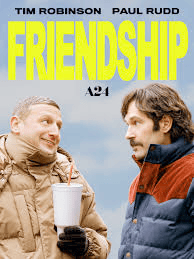
I’ve written a little bit about friendship and friendship in movies over the years, the way that people grow apart knowingly and unknowingly, the choices we make that bring us closer, the trauma bonding, but there aren’t that many movies that so perfectly encapsulate the awkwardness of male friendships in adulthood as Friendship, which billed itself cleverly as the horror sibling of I Love You, Man, the natural next step for Paul Rudd after so excellently articulating a concept that it spawned a whole genre of awkward comedies about dudes trying hard to connect after graduating from college and starting (or not) families and careers. Craig Waterman (played by Tim Robinson) anchors this movie with his indefatigably bland, chipper attitude, filled with awkward puns and flat dad jokes that make your skin crawl, but he delivers them with such aplomb, such clueless exuberance, with a lack of self-awareness that almost broaches on swagger, like he’s daring for someone to call him on it.
It’s a situation that reflects the dark turn in our timeline, away from the schmaltzy kindheartedness of the early 2010s and Jason Segel’s vibes, and toward the degeneracy and ugliness of the 2020s deterioration of norms. The trailer sends up one of Craig’s most memorable quips early on when he scolds his neighbor Austin for taking him in too quickly and treating him like one of the guys. The love bombing of Austin on Craig is one of the major elements of the first act that blossoms and molders over the course of the rest of the film in weird and interesting ways–in the tunnels (both times), in the jail cell, and in the final scene. And I think most socially competent men of a certain age have lived long enough to recognize in their own lives two or three of these friendship implosions, the funhouse mirror image of what Maria Bamford describes as “no friend left behind” in her stand-up, the reaction against the reaction to call everyone “toxic” and distance oneself from “unpleasant” peoples.
In the course of the past five years, I’ve gone from spending every weekend of my life playing card and board games with a male friend, to pet sitting their house during the pandemic, to having them watch my gremlins, to not talking at all because of some unhinged demands for time, all while watching this guy willingly quit the only job he’s ever had because of “ethical concerns” and then refuse to seek education or employment for three plus years, while I’ve politely continued to 1) have a job and 2) self respect (as much as someone can), which is all to say it’s been an exercise in watching how different people are able to cope with mediocrity and the narrowing of personal goals, watching some friends who fell in and out of similar situations claw their way back into employment in that same span of time, or others embrace the next stage of life for this guy with patience and grace, neither of which I’ve ever had. Friendship executes on its ability to flirt with the fantasy of Platonic male friendships that break you out of your shell you’ve made for yourself, the transformational, aspirational magic that comes from meeting someone whom you wish to emulate and grow into at at time of life when socialization is not easy or always sought out. It’s not for the kind-hearted Bamfords of the world. It is for the bridge burners, the friend mountaineers, the social pruners of the world, the pettiest among us.
Probably the most mesmerizing element of this movie, besides the capacity for everyone around Craig to politely ignore his eccentricities in order to see the good in him, is the way that the script has Craig appropriate the lexicon of his victims almost effortlessly, his building of a failed idiolect. He’s so often copying the words that other people say as a means of ingratiating himself toward them, whether it’s his son or his neighbor Austin Carmichael, or his wife Tami.
What makes this movie so fun is the way that it curls in on itself but also allows for so many opportunities for forgiveness, so many moments for reset, like when, (spoiler) even after the two have separated, Tami comes back to the house for their son’s birthday and flirts with Craig despite him really having earned it in any way. The second act of this movie is really just Craig reliving his meet cute with Austin but with his wife and the consequences that come from attempting to do that.


