
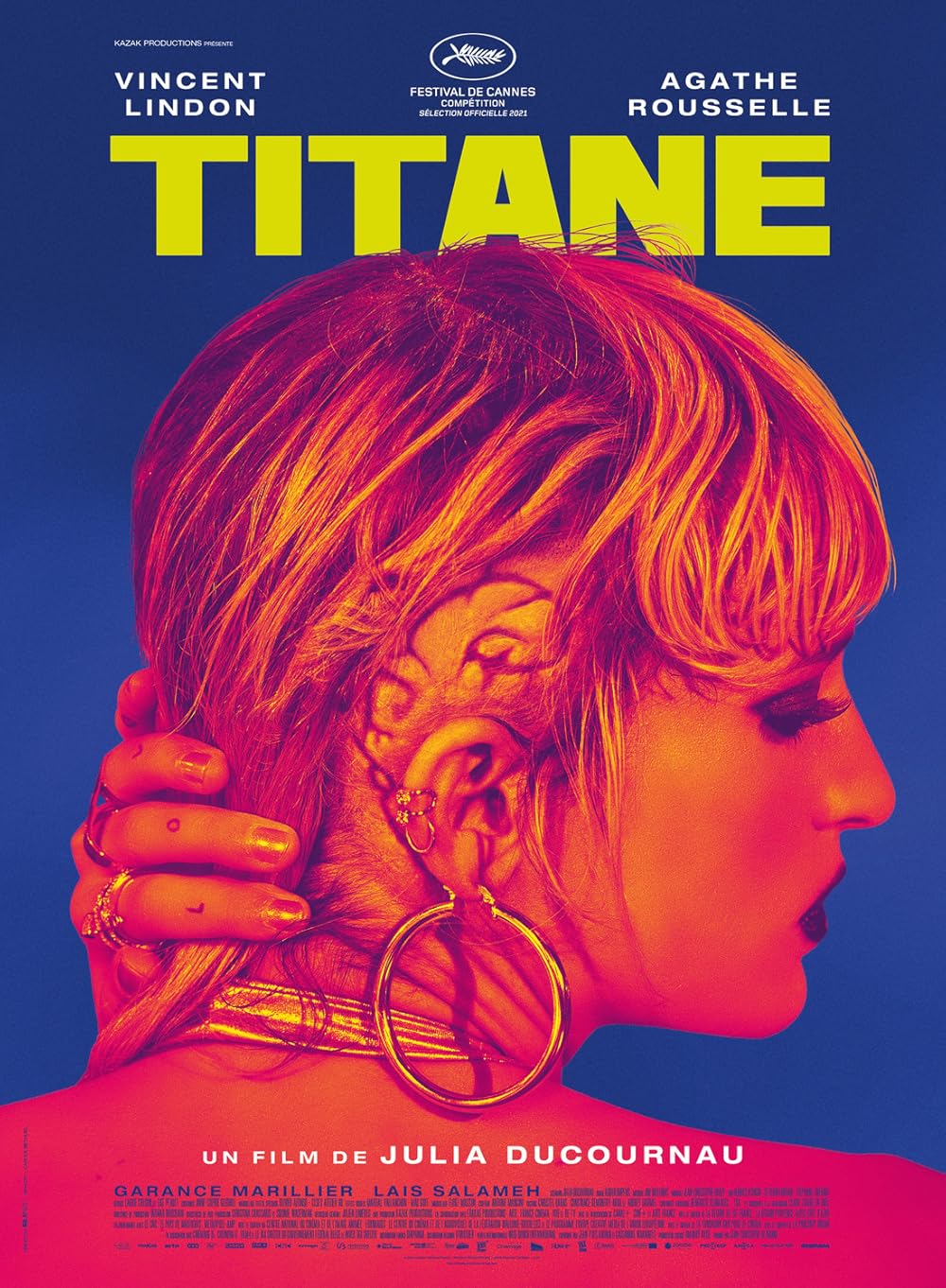
I’m late to this party, but I have some things to say. Titane was the winner of last year’s top prize at Cannes. This is director Julia Ducournau’s sophomore film after Raw (2016), which was the first movie in a very long time that I watched late at night one weekend when Wife was away on a business trip, and I liked it so much that I rewound to the beginning and watched again. We often talk about movie’s quality through their ability to be rewatched, but it’s seldom in my own experience to have the time between first and second viewing be so immediate. Ducorurnau’s Raw was a beautiful film about sisterhood and shame and sex and all of those things were bound neatly in a metaphor of cannibalism in a way that allowed for the audience to plug in their own experiences and capitalize on the flexibility of the vehicle. Titane features Ducournau’s interest in sexuality and shame, but she’s interested in different facets than those of the young ingenue of Raw. Her protagonist is more isolated, disillusioned, but every bit–if not more–headstrong, impulsive, and compulsive. At this point I need to ruin some elements of the plot.
I imagine one of the reasons why this film was so successful among critics was because of how different it was from the rest of its competitors. I think I’ve written about this phenomena before, several times, I think, but the one that comes to mind right now is the way in which movies try to tell an old story using a more diverse cast. It works because it creates opportunities for new directions in storytelling and new potential. Florence Pugh’s Lady Macbeth came out earlier than we started writing about movies here, but in a lot of ways that Victorian kept woman narrative is told to death in bodice rippers like the Bridgerton novels and in every iteration of the Boleyn that makes its way to television, movies, and TikTok.

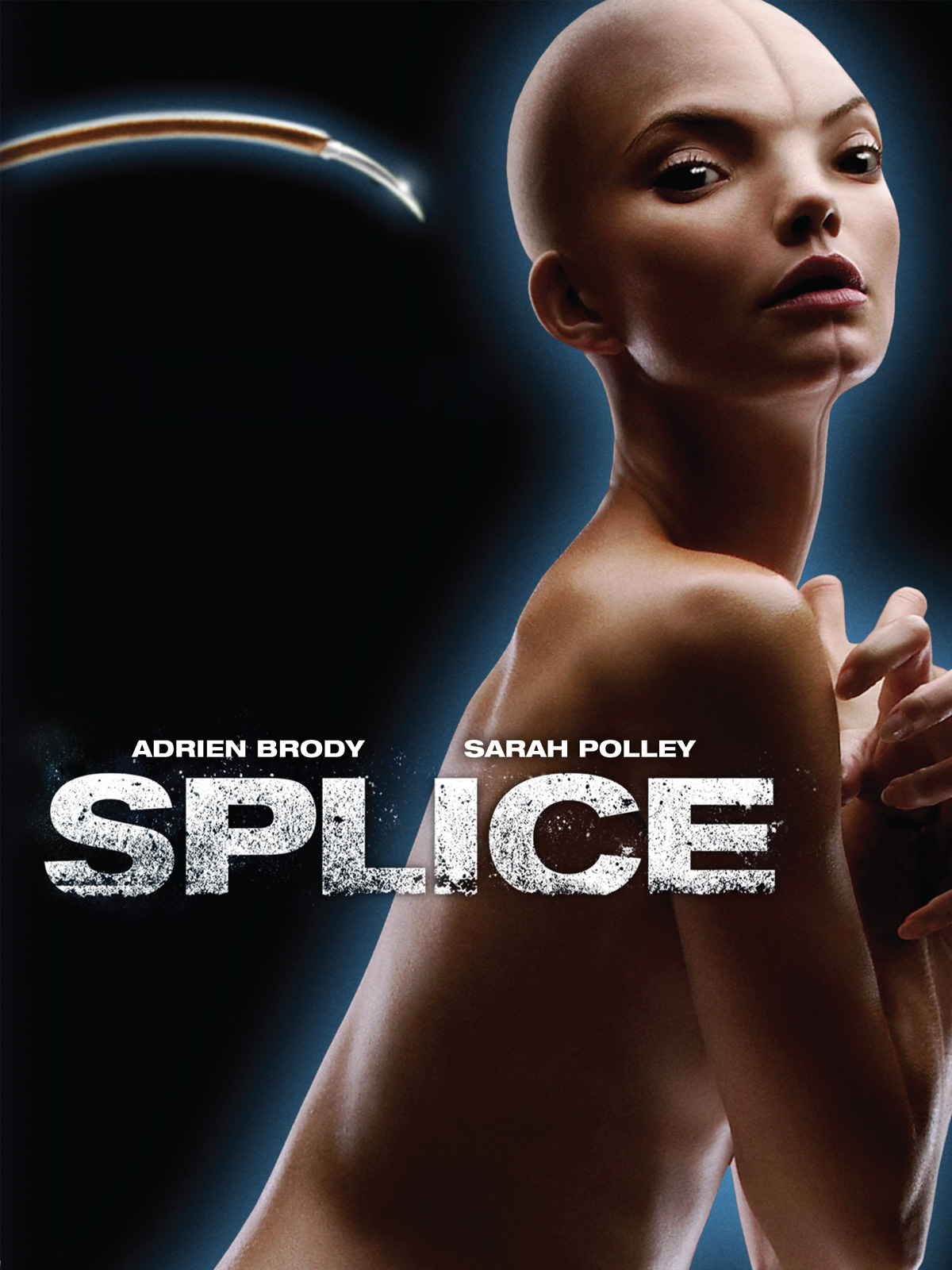
I can imagine Titane’s socially distanced, masked audience walking out of that screening thinking, What the fuck did I just watch? Did she actually twerk on that car? but also, Only this past year of Trauma could manifest itself in a movie that horny and inbred, and, Did she really have a car baby? Or, isn’t this the movie Splice from 2009 that you saw with your dad because you thought it would be Pan’s Labyrinth but science, but instead it was an erotic thriller but science?
It’s hard to tell what metaphor is operating here–at first it seems like it might be about rape because of the unwanted advances from Adrien’s fan at the car show, but then we have the extended sequence(s) of fantastical car sex and the tattoo above her breast, “Love is a dog from hell,” referencing Charles Bukowski’s book of poetry from the 1970s. Maybe it’s a metaphor for motherhood? Or surrogacy? Adoption? The trans experience? Friend saw this when it came out last fall and when I called him up to ask him his thoughts, he said he tried using these all as frameworks for understanding the film but had to keep dropping them as new scenes came up. Flexible metaphors are hard to come by. It’s what makes the Babadook so fucking awesome and Personal Shopper one of the great films of Kristen Stewart’s career. Ducorurnau knows what she’s doing, but sometimes it’s not enough for just the director to understand.
Adrien as a descendant of trauma is an interesting lens into our collective 2021 psyche–she’s sexually frustrated and violent and anti-social. It reminds me of the moment I realized that my brain had been truly shriveled by covid in June of 2020 when people were starting to loosen their restrict social distancing rules a little and going on outings together: I was at the grocery store trying to pick up enough groceries for two weeks, like you do, when I saw two teenagers holding hands and kissing in an aisle and I immediately thought, Wow, that brother and sister are really affectionate! When I should’ve thought, those people are not blood relatives–how quaint! This movie has so much queer energy and I’m sort of questioning whether or not that’s OK, but I think it is? When I first saw this movie written up after Cannes I thought it was going to play entirely on the verbal pun of “auto-erotic” for cars and people, but after seeing the movie I’m more confused about the extent to which this pun is present?


