
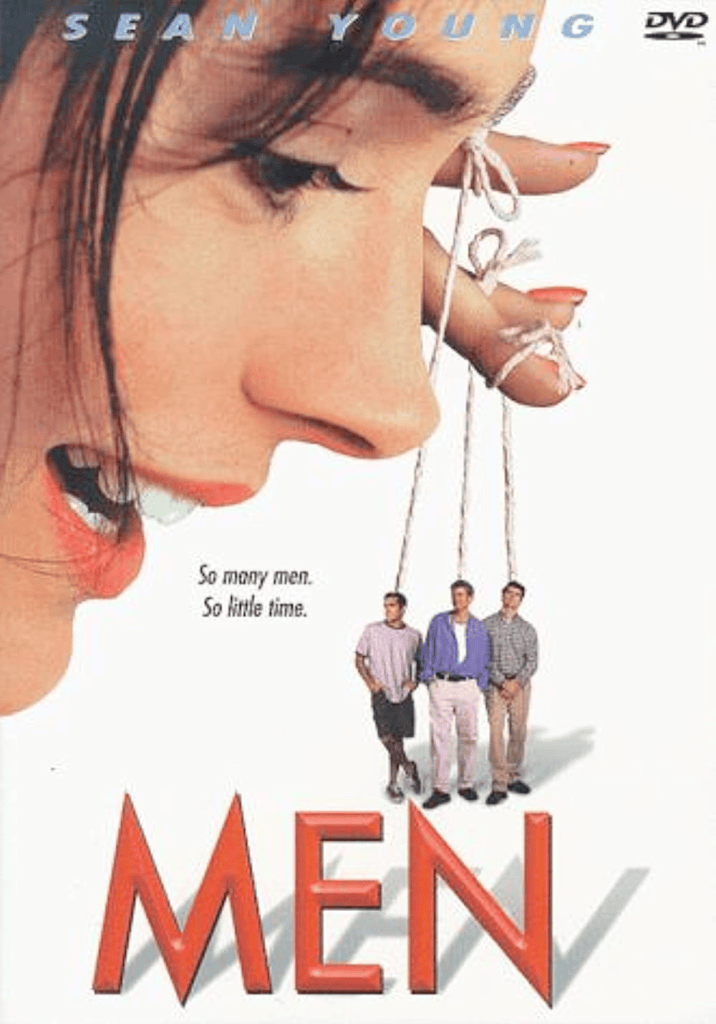
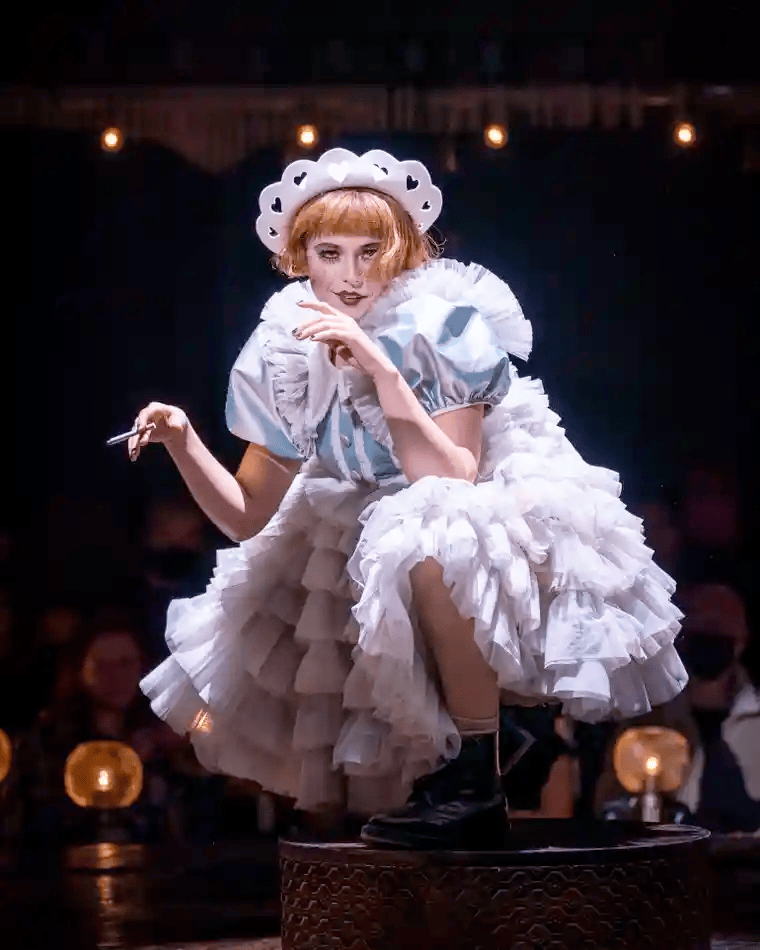
Alex Garland of Annihilation and Ex Machina directorial fame has graced us with a new movie starring the talented Jessie Buckley and Rory Kinnear, but it’s probably not worth your time. This movie is actually Kinnear’s audition to play every role in every movie, because goddamn why not after seeing his range here, not so much Buckley, who is stuck wrangling with an uneven script that leaves her mostly rummaging through a trauma plot for scraps (although from the sound of it, it sounds like she had the time of her life filming). I remember reading somewhere that Buckley is known for a signature smirk and then seeing this unforgettable photo of her playing Sally Bowles in Cabaret and really that’s set the tone for my viewing of this movie, where I cannot unsee any of it.
I take some issue with the assertion that 2018’s Wild Rose was Buckley’s breakout role and wholeheartedly recommend that you stop reading now and go in cold to a barnburner of a romantic thriller called Beast, which came out almost five years to the day in 2017. I think this movie still sits in a special place in this house as one of Wife and my most pleasant surprises seeing movies together.

Anyway, this movie, Men.
It was not as complicated, but if you like Rory Kinnear this is a great movie for you. He plays 95% of the characters in this film. It’s a slowwww burn at the start. I’m talking multiple seconds of listening to the echoes of rain hitting water, pollen float around the English countryside, watching Buckley stare at unremarkable flora. the ending is very much in the vein of Garland’s film, Annihilation, in terms of visual creepiness and also A24’s over the top, gross-out factor aesthetic. You stare directly at the abyss and can’t look away. But ultimately, Friends and I–and granted we are all Men–couldn’t figure out if there was any cogent commentary to add to the existing discourse about toxic masculinity, so it doesn’t do very much more than feel like a gendered horror film, in the same family as something like Alien, where the (mostly male) audience is enticed to sympathize with the unusual fears of being a woman and walking alone. These movies create horror through the gender-swapping of mundane situations, so that the audience experiences the world through the protagonist’s eyes, but also see men on screen endure what women do every day, as with Alien’s forced birth scare, which I’ve–mirabile dictu–never mentioned before, it appears.
But for a movie that purports to break so much from the tropes of the genre, Men feels pretty par for the course for home invasion subgenre. It suffers from some serious genre fatigue and circles back hard on the house as the main location for the second half of the film, which is a shame, because the house is devoid of any emotional topography or symbolic meaning, whereas all the other settings–the churchyard, the woods, the pub–are ripe for the taking in terms of their storytelling potential. The fixation with this single location makes me think this might’ve been a really badass play, but feels visually cramped as a movie. At times the camera is at pains to look around corners, which doesn’t actually end up providing as much tension as it sounds, so much as frustration that the sight lines aren’t clear. You might get more mileage out of the similarly weird but narratively more dynamic I’m Thinking of Ending Things, starring Buckley again.
But in terms of advancing the popular narrative about masculinity, Men has remarkably little to add to complicate or clarify. Men are complicit, cruel, constantly gaslighting, manipulative, pathetic, horny–do any of the horror scenes shed light in a more engaging way than some of the subtler character work of non-Kinnear actors? (Update: May 26, Slate has a lovely discussion about the ending of this movie and how stupid it is.)


