
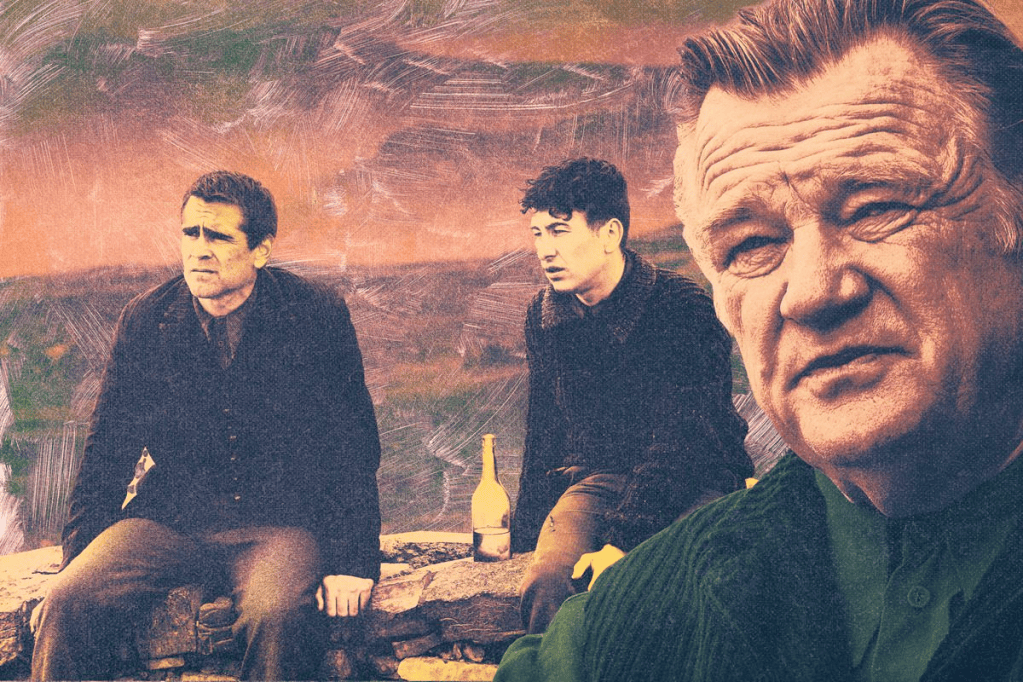
Banshees of Inisherin packs a stealthy gut punch that is going to straight up ruin your week, so go in with your heart disconnected from your chest, clutching your best friend if you dare.
Banshees is a movie that I hadn’t given much thought to until after Brendan Gleeson had given a very adorable monologue at SNL in which he describes the movie offhandedly as a “film about two fellows who fall out because one of them is a little too needy.” Even then, I wasn’t quite motivated to see it until a few weeks later when Friend sent me a text that read, “Why am I the one who is telling you about this movie? We need to see this together,” which I assumed was his way of softly breaking up with me. As it happened, my parents are in town this week and, as you know by this point, the only time that I ever get to see movies with them anymore is when we’re doing our own Irish exits from endless Christmas parties. So Friend and parents went together.
Banshees is directed by the same guy who did Three Billboards Outside Ebbing, MO., a divisive movie that will instantly tell you if you will enjoy the dark humor of this movie or not. Three Billboards is a perennial watch for me, something that I end up stumbling on from time to time on planes or when I’m marathoning Sam Rockwell’s greatest hits, which is always. At this point, it’s hard for me to say very much without spoilers, so let’s wait for that crowd to clear out before we get in the weeds or at least the undergrowth.
This film plays well on a number of different levels: Friends left very satisfied with the way that it functions as a neat allegory for the Irish Civil War. I am not a huge fan of allegory, so I’m more inclined to think about the story as an exploration informed by the political theme of civil war. The backdrop of Inisherin, a faraway, rural costal town off Ireland properly distances this friend breakup drama from the present in ways that make every detail feel charged with metaphor, similar to the way that The Favourite distanced itself from the present in aesthetic but maintained a focus on churlishness and bad behavior very of this moment.
Period pieces–like Phantom Thread, No Country, The Beguiled–give the filmmakers the ability to comment on the present by freighting their character’s isolation, alienation, and disconnect through the absence of modern technology. Bridgerton’s adaptation to Netflix works so well in part because it translates the stresses and perils of modern courtship through the tightly restricted and regulated social norms of the Regency period. The emphasis on highly charged, non-physical, transactional romantic relationships among the rarefied upper class speaks to a certain type of touch-starved television viewer, forced to refrain from social gatherings during the winter surge of the pandemic.
So with Banshees, instead of the agony of a heartfelt text going unread for hours (see She-Hulk: Attorney at Law Season 1, Episode 7 “Just Jen” for possibly the most grand depiction of this), we get images of Colin Ferrell’s Pádraic walking to a fro his tiny hamlet to find and avoid his erstwhile friend Colm. There is nothing else to do and nowhere else to go than the town pub, a black hole whose gravity constantly pulls these two hapless men into the same too-small space, perfectly reconstructing the social forces that find us in 2022 circling our frenemies in intertwined networks. The phenomenon is not entirely new. I Love You, Man was a watershed movie that helped to elevate a genre of films which spoke to the disaffection and cluelessness of male friendship in your thirties. What Banshees does so well is the slow burn of the male friendship breakup, something Slate’s Dan Kois talks about so soulfully in his reviews of two memoirs of friends that came out this year.
The sudden, unexpected dissolution of friendships is something that tugs on everyone’s heartstrings, but in some ways, I think it’s particularly of interest to men my age because of our relative inexperience with this specific form of helplessness. You are no longer a child experiencing the disappointments of forced socialization in school. You are not a college student, brashly redefining all of the things you felt so ashamed of in high school, running away from the things about yourself that you are most disgusted by. You are an adult and your friends are your own, those friendships, those carefully crafted, deep bonds that you have mindfully cultivated over months and years, or as Dan Kois puts it,
We were tight, to the exclusion and alienation of others. Our friendship created a closed ecosystem, one so self-contained that I think now it was doomed to system failure, like a malfunctioning spaceship traveling to another galaxy.
And when those friendships suddenly implode, you are confronted with the reality that you are not too old to grow apart from others and that you are not too old to overstay someone else’s capacity for forgiveness. So, yes, I think Banshees can be read universally, and at the same time, I think that my vantage point staring at this movie through the narrow window of the present vantage point in my thirties gives insight to the awkward, mealy-mouthed dumbfoundedness of Pádraic when he is first confronted with the news of his friend’s betrayal of their friendship. Sure, it’s allegorical, but it’s also a story that asks the question, why shouldn’t we be allowed to socialize based on preference and not obligation? Why is it rude to not be friends or friendly?
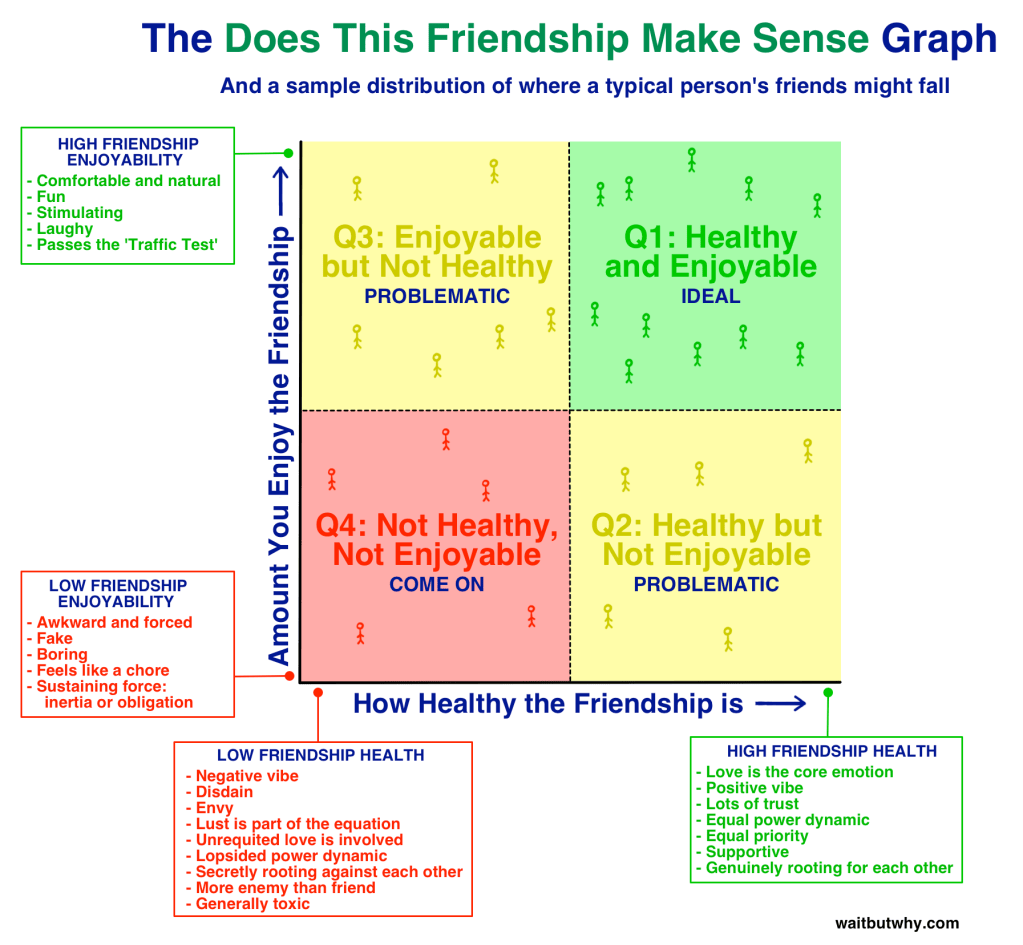
Banshees is careful to paint two characters who go out of their way not to hurt one another after this initial bid. Colm’s ask is eccentric, maybe, but the consequence he offers for his own independence from a relationship he no longer finds rewarding and healthy on the Does This Friendship Make Sense Graph is entirely dependent on harming himself as a means of sparing his friend, a perfect tragic gambit.
Banshees does an excellent job of not spending too much time psychoanalyzing Colm’s reasons for ending the friendship, and the movie wouldn’t be nearly as satisfying if it did. Colm does not have family with whom he can talk through the breakup, not like Pádraic’s excellent and very funny Siobhan, played none other than Kerry Condon, JULIA FROM HBO ROME! And while we’re putting in plugs for actors, Barry Keoghan does a most excellent job crafting a creepy but sympathetic fuckboy in the character Dominic (Keoghan’s filmography is nothing short of incredible: Dunkirk, The Batman, and American Animals, just to name a few).
The question shifts from why shouldn’t we be able to terminate friendships based on preference to showcase the collateral damage of living for oneself instead of living for others, the myriad ways in which we catch victims in the undertow of our solipsistic rejection of others we regard as beneath us in generosity of spirit, in intellect, and in ambitions. “Some things are worth not letting go,” Pádraic says in their last meeting of the movie, a direct challenge to the vexing and fleeting impulse toward forgiveness, which haunts both of these two men. Friend said to me yesterday when we were meeting to see another movie, Banshees “is the movie that [his Wife and he] will be talking about more than any other from this year and will never see again.” I’m not sure that this movie can outshine the sheer insanity of Bullet Train or the creepiness of Nope or the freshness of Fire Island, but it surely stands out as the right movie at the right time, destined to be a classic breakup movie for repressed macho men.
I would be remiss if I didn’t include Dan Gerber’s poem about a father’s advice to his daughter after an argument with her friend:
Advice
You know how, after it rains,
my father told me one August afternoon
when I struggled with something
hurtful my best friend had said,
how worms come out and
crawl all over the sidewalk
and it stays a big mess
a long time after it’s over
if you step on them?
Leave them alone,
he went on to say,
after clearing his throat,
and when the rain stops,
they crawl back into the ground.


