
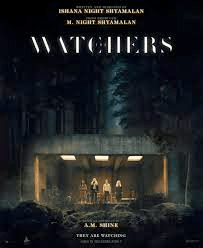
I am acutely aware that this movie shares a name with an Amazon Prime Original that I reviewed a few years back and that whenever someone searches for this movie they’re also going to get that review, and I actually don’t think that mixing up either of these two movies will cause you any trouble. We should start by saying that this is a nepo-baby film, M Night Shyamalan found a way to catfish audiences without even laying hands on a camera by giving birth to Ishana Shyamalan and then waiting 24 years. At nearly two hours long, this film is intensely boring and has little to actually say about just about anything beyond the fact that… no, I can’t do it. Spoilers after the jump.
The film’s atrocious writing is buoyed by some creative choices to create symmetrical scenes and details that reduplicate like an officious printer throughout the movie. Mina mimics the sound of her sister’s voice on her answering machine despite not returning her cars; she mimics her mom’s voice when she’s being lectured as a child; her bird mimics her voice; and once it becomes convenient to the plot, the Watchers mimic everyone’s voices mostly to be creeps. There are these kind of handy little twin scenes sprinkled throughout the movie that actually are probably pretty cool upon second viewing, but I can’t think of a single damn human who is going to sit through this movie twice to notice: for instance, the way that Mina is watching the reality television stars on the TV while she’s being watched by the Watchers is a handy little mise-en-abyme, but we get the same sequence later when they’re in the bunker watching the recording from the Professor, and then again when we’re watching Mina and Mina’s double mirroring her through the glass pane of Ciara’s house (played by Georgina Campbell from the indie horror flick Barbarian in 2022 or Black Mirror’s Hang the DJ before that!).
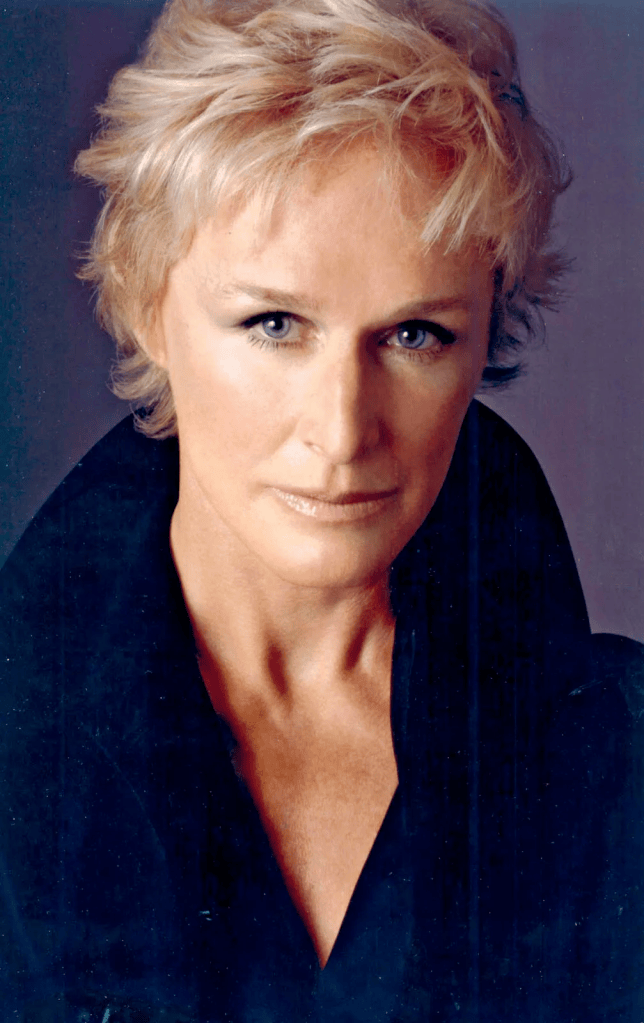
Another twin scene we get are the–err…–twins? It takes some time for us to learn this through flashbacks but Mina is a twin! And her sister has twin boys? And obviously the changelings take the forms they recognize, so they’re twinning, which actually leads one to suspect that Mina has been–twist!–a changeling the whole time, which is why she tells Darwin “you wouldn’t like me if you knew who I really was” at the beginning of the first act! But that twist isn’t the twist. The twist is that the Professor had sex with an evil faerie and made a “halfling” child that learned? to impersonate his dead wife, Madeline? without meeting her through… photographs of her, perhaps? It doesn’t matter, because it’s not as important as the fact that Madeline/halfling (played by not Glenn Close) has been plausibly human the whole time and there really isn’t an indication that she could be a Watcher based on the information provided for most of the movie: the Rules (different from the Rules that she basically made up to keep her captives captive) of the movie are that Watchers are scrupulous rule-enforcers who are pretty spotty about arriving to the watch parties on time, and also they can’t come out into the daytime. Except!
So we’re stuck in this weird situation where we don’t know if the characters we’re watching are Cylons playing humans or humans who think they might be Cylons? And it ends up just feeling like a bad game of Ultimate Werewolf, where we really ought to have more clues to understanding how the mechanics of this world work but we don’t. It’s not the only time that this has happened, obviously. There are lots of great movies where the baddies don’t know they’re baddies.
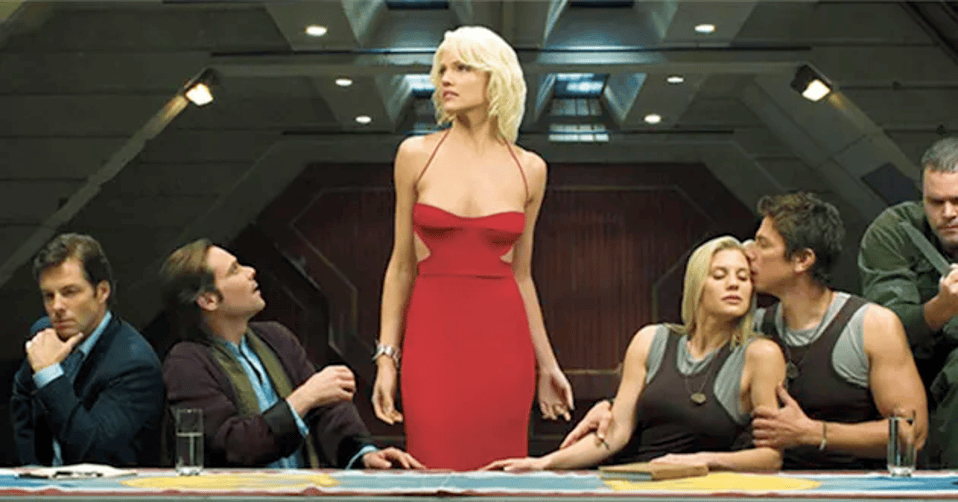
Or where the baddies don’t (all these links are spoiler-y) know they’re robots. Or where the goodies are robots that look like humans? Or where everyone is robots, but no one knows (full circle to Georgina Campbell!)? I’m struggling to find a movie where everyone is human but they suspect their peers of being not humans, but I suspect that some Battlestar or Phillip K Dick nerd is going to write to me later with an unsatisfying but pedantic answer.
Which is just to say that it’s no great twist that a bunch of monsters whose sole skill is imitation might have million-monkeyed their way into producing a passable deepfake in order to dupe three confused burnouts. There are actually two movies coming out in the next eight weeks that promise to do this exact premise, the most zeitgeisty horror film subject of the decade (cuckoos) but much better: one is actually called Cuckoo (starring Hunter Schaffer!) which will inevitably so self-referential to this genre of horror that it will kill off the entire phenomenon on its own, and the other is so batshit crazy insane that people are even writing about how batshit crazy the trailer for it is (Longlegs). Maika Monroe, who receives top billing on Longlegs, is actually an alumna of a DIFFERENT cuckoo movie from a decade ago, It Follows, just to demonstrate how these kinds of things eat their own tails eventually.
But to return things to The Watchers, the question I found and find myself asking is what does the mimicry attempt to comment on in our world? What is its analog? Because the only attempts at answering this directly come from Mina toward the end and they make almost no sense: Mina says you’re just like me, we don’t fit in anywhere… but that doesn’t mean you have to be bad? What? There’s some hand-waving about the way that Mina has to let go of the guilt of her complicity in the death of her mother in a vehicular accident, but that actually has the least to do with the theme of mimicry of anything in the movie, unless it were a twist and she’s found a way to Don Draper her way into someone else’s life and live vicariously through their stolen identity! (No.) Or maybe she also (spoiler link again) killed her twin on accident, but she takes her identity as a form of self-punishment so that she can carry on the life that seemed more fulfilled! (Also, no.)
The subtextual answers have to do with oblique references to environmental degradation or maybe the rise of AI-generated deepfakes (the way that Madeline’s face changes in its final showdown scene). But there’s no actual connection between the weirdness of Mina’s penchant for performing other characters and the faeries she encounters. If the real villain is Imposter Syndrome, which we all know it is, it still doesn’t make a lot of sense. Mina’s dissociative habits are a means of self-soothing without re-engaging with her childhood trauma. While they’re maybe not super healthy, they definitely don’t rise to the trap-me-in-a-reality-tv-box-and-wear-my-skin level of commentary. She wears a wig when she wants to get laid anonymously what’s the big deal? I thought for a moment maybe it was a commentary on movies in general? Which reminds me of a quote I read recently in an interview with one of my semi-reclusive/well-adjusted favorite actresses, Shannon Sossamon, who said off-handedly in an interview with Huffpost that young people “would much rather watch unfiltered humanity” on social media “than a pretend version of it in some film or television show.” I wondered idly while watching what I think is the director making a Shyamalan-esque cameo in her own movie through the reality television dating show that’s on in the television in the Stage in the woods (just like her sister Saleka cameos as the Taylor Swift-esque popstar of her father’s forthcoming Trap) whether maybe there is something here about the performative aspect of being a twenty-something and feeling like an alien trying to be a human being? The way that, especially women, but men too butting up against ideas of masculinity from all sides of the political spectrum, might feel the ghostly tendrils of archetype pulling at their actions, demanding they fulfill their roles. But we never actually get any of that performance inside the Stage in the woods. The only directive they get is kind of vague and from Madeline to “act normal,” which in retrospect makes sense, but as directive for entertainment is quite strange. But surely if the film’s central metaphor is thinking about the way that we perform an exaggerated character of ourselves (online?) for others, there would be no need for the movement to the bunker in the third act?
So we find ourselves clambering for meaning in a movie with one or two good scares and a lot of terrible dialogue, which is just about all you can say for The Watchers, unless you’re talking about the OTHER Watchers, in which case you had Sydney Sweeney so what is your problem?


