
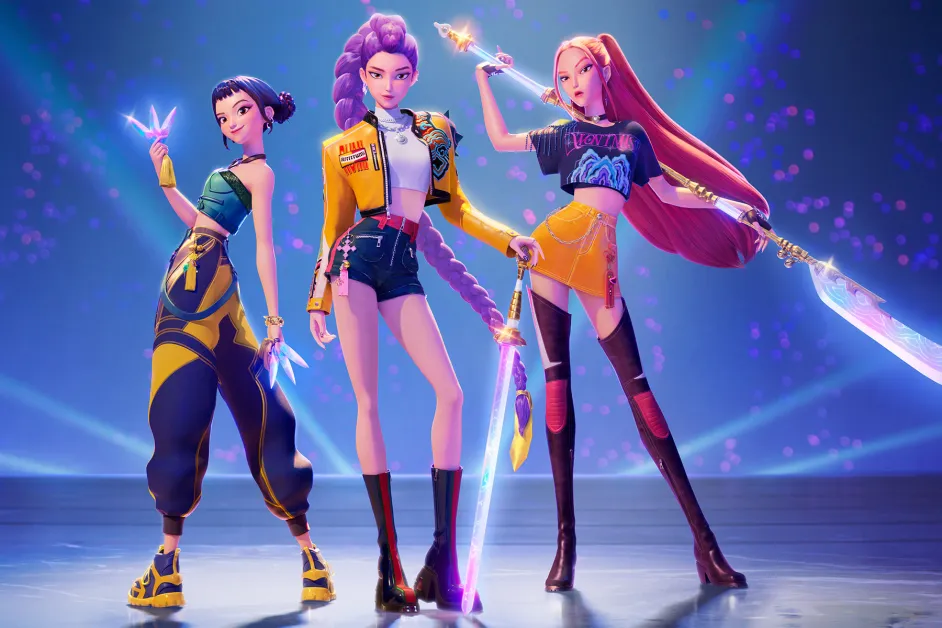
This weekend KPOP Demon Hunters was the highest grossing movie and there’s a lot of discourse about the way that the film became a sleeper hit, launched multiple songs to the top 10 list on the charts, and just generally took the internet by storm. It is an interesting movie because of the way that it operates on a different wavelength than the rest of the movie universe, partly because it’s such a delightfully weird and specific genre mashup (Indian Bakers Buddy Cop! Elderly Gay Vampires Plan a Funeral! Nearsighted Triplets’ Love Quadrangle with Schlubby Secretary!) and partly because it’s Netflix. Despite the fact that they engineered a film that would worm its way into the brains of at least six ten year old girls who performed the choreo for three songs at the screening my gremlin and I went to, for whatever reason, a theatrical release was not originally in the cards. Execs expected us to watch it over and over again on our tiny screens like peasants and not sing it out loud in public spaces as God or Gwi-Ma or whichever power you pray to intended.
If you have not encountered this film yet, I encourage you to watch the music video for literally any song on the album. The fight choreography is meticulously done in a League of Legends meets Laika style with aesthetic homages to Korean culture like the design of the demons, visual humor, and a distinctive neon color palette. KPDH’s mass appeal does not mean that it has watered down culturally specific elements of the plot: there are still deep-in-the-weeds KPop in jokes about KPop tropes, send-ups in the lyrics, and so so so much food porn. Speaking of porn, the movie is unapologetically horny, and clever about the way that it dramatizes the (I hesitate to call it “insular”) intimidating world of KPop by hanging on it a paranormal hunter plot in the same vein as Buffy and VE Schwab’s transcendently silly First Blood.
There are a few really excellent twists in this movie and after a second viewing, the demon tiger and his little creepy companion really are show stealers, but by far the best twist is the way that the song Takedown takes on its polyvalence over the course of the story, the way it uses the process of songwriting and editing as a means of showing thought and dexterity of mind, rather than as a superficial setup to the intended lyric. KPDM has all hits, no misses, because the songs live entirely in the universe of the story, not as flare on top of a glittering but empty story. The characters inhabit a musical-like story in which their words reflect their thoughts but also represent a dual role of demon hunters using songs as weapons and KPop stars trying to communicate with fans.
KPDM doesn’t have a lot to say about the strains of a ruthless industry, obsessed with sexual purity and strict behavioral standards that are not queer-friendly, but it does have a lot to say about being true to yourself and friendship, which seems like a different route to the same end. Probably the most delicious takedown isn’t for a demon at all, so much as the really lame aunt who Frozens our protagonist until the bitter end. Adults in general (with the exception maybe of Daniel Dae Kim) are not to be trusted in Demon Hunters, because they are too caught up in strict adherence to cultural standards of the past with no capacity for nuance or trust that people can contain contradictory feelings at the same time. Rumi doesn’t actually forgive her aunt for her incredibly bad advice in their final interaction, which could just have easily been a nice little pep talk, and that comfort the film has with cutting ties is one of its more powerful and interesting comments.
There’s still so much to say about Rumi’s parentage and I assume after all of this someone is going to make a prequel for me to pan in about six months to a year, so we’ll meet back here next summer for the part where I say I just turned it off to watch the original again.


